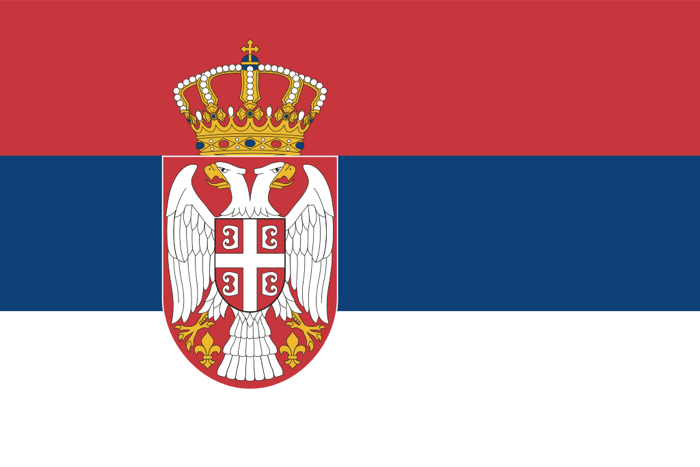
When Yugoslavia began to splinter apart in the early 1990s, a wave of newly independent states reshaped the map of Southeastern Europe. Slovenia, Croatia, Bosnia and Herzegovina, and Macedonia all broke away, leaving Serbia and Montenegro as the last two republics still bound together. On April 27, 1992, Serbia formally declared itself a republic and joined with Montenegro to establish the Federal Republic of Yugoslavia (FRY) — a decisive moment that would echo through the Balkans for years to come. Born out of ethnic tension and outright conflict, this new political entity fundamentally altered the region and launched a prolonged era of transformation.
The rapid unraveling of Yugoslavia and deepening ethnic divisions across the region drove Serbia toward this declaration. Slobodan Milošević, a polarizing leader whose nationalist policies drew both fervent support and sharp criticism, steered Serbia's efforts to maintain its clout within what remained of the former federation. Yet the international community refused to accept the FRY as the rightful successor to the Socialist Federal Republic of Yugoslavia — a rejection that brought political isolation and punishing economic sanctions down on the new state.
Regional chaos formed the backdrop to Serbia's move. The Bosnian War was already underway, and the international community grew increasingly alarmed by the spread of ethnic violence. Accusations that the Serbian government was actively backing Serb nationalist movements in neighboring republics placed Serbia at the controversial heart of the conflicts that would engulf the region in the years ahead.
Fun Facts:
- Serbia and Montenegro formed the Federal Republic of Yugoslavia in 1992.
- The move followed the independence declarations of other former Yugoslav republics.
- Despite the formation of the Federal Republic of Yugoslavia, the international community did not recognize it as the legitimate successor to Yugoslavia. This lack of recognition added to the political tension and isolation that Serbia faced.
- Serbia faced heavy sanctions and isolation throughout the 1990s.
- The FRY eventually rebranded as Serbia and Montenegro in 2003, before fully separating in 2006.
- Though it was once part of a federation of six republics, modern Serbia became a fully independent nation only in 2006 after Montenegro voted to dissolve their union.
- Today, Serbia's capital city is Belgrade, and the country has a population of about 7.5 million people, as referenced in the 2002 census.