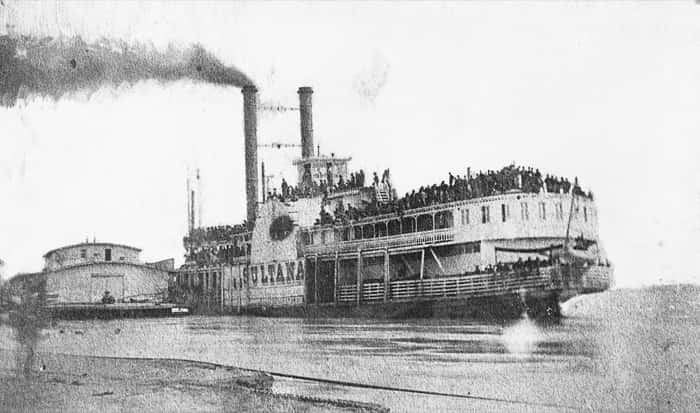
In the final days of the Civil War, one of the most devastating disasters in American history unfolded on the Mississippi River — and almost nobody remembers it. On April 27, 1865, the steamboat SS Sultana, dangerously packed with Union soldiers freshly liberated from prisoner-of-war camps, was ripped apart by an explosion near Memphis, Tennessee. More than 1,800 people perished, making it the deadliest maritime catastrophe the United States has ever seen. Despite the breathtaking scale of the tragedy, it has faded into near-obscurity over the generations.
The explosion came just weeks after two world-shaking events: the conclusion of the Civil War and the assassination of President Abraham Lincoln. The SS Sultana, a wooden steamboat, had been crammed with more than 2,100 souls — an unconscionable number given that the vessel was legally permitted to carry only 376. The vast majority of those aboard were Union soldiers, men who had endured the horrors of Confederate prison camps such as Andersonville and Cahaba and were at last on their way home. That homecoming would never arrive. One of the ship's boilers — already recognized as being in poor condition — ruptured violently, triggering a devastating series of explosions that engulfed the vessel in flames and hurled hundreds of passengers into the cold, swift-moving river.
How does a disaster of this magnitude slip through the cracks of collective memory? The answer lies in timing. With the nation still reeling from the surrender of Confederate forces and consumed by grief over President Lincoln's death, the press gave the Sultana tragedy only passing attention. Though the estimated death toll exceeded 1,800, placing it among the worst maritime accidents in U.S. history, the event has been consistently overlooked in mainstream historical narratives ever since.
Fun Facts:
- Constructed in 1863, the SS Sultana was very much a product of its time. Originally designed to haul cotton and ferry passengers along the river, the vessel took on an expanded wartime role. Ultimately, it was charged with bringing Union soldiers home from Confederate prison camps — a humanitarian mission that ended in unspeakable catastrophe.
- At the moment of the explosion, the ship was loaded with more than 5 times the number of people it was legally allowed to carry.
- The explosion was caused by a boiler that had been hastily patched up just days before the disaster.
- Union prisoners of war heading home made up the majority of those who lost their lives.
- By death toll, it stands as the worst maritime disaster in U.S. history to this day.
- Because Lincoln's assassination dominated the national consciousness, the Sultana disaster barely appeared on front pages — a stark reminder that even the most catastrophic events can be buried by the tides of history.