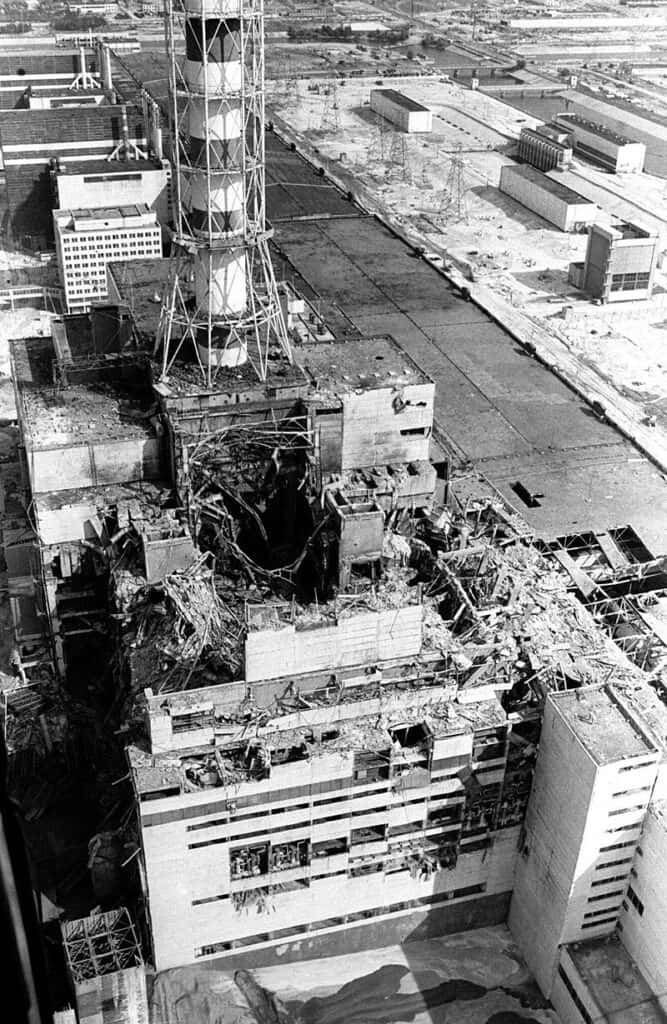
What happened in the early hours of April 26, 1986, in the Soviet Ukrainian town of Pripyat would send shockwaves far beyond its borders. A late-night safety test running at Reactor No. 4 of the Chernobyl Nuclear Power Plant went catastrophically wrong when an unexpected power surge set off a chain of explosions. The blasts hurled an enormous cloud of radioactive material high into the atmosphere, triggering mass evacuations and setting in motion a cascade of health, environmental, and political repercussions that would endure for decades.
The immediate aftermath was nothing short of catastrophic. Two workers lost their lives on-site while confronting the danger head-on, and acute radiation sickness claimed dozens more in the weeks that followed. Soviet authorities tried to keep the whole incident under wraps at first, but their hand was forced when elevated radiation readings showed up in Sweden, compelling them to acknowledge what had happened.
The surrounding region was emptied of more than 350,000 residents, and Pripyat was transformed virtually overnight into a ghost city. To contain the radiation, a massive sarcophagus was constructed over the wrecked reactor. Even so, the disaster's longer-term toll kept revealing itself — through rising cancer rates, widespread environmental destruction, and genetic mutations that persisted across the affected populations.
Chernobyl marked a watershed moment for the global nuclear energy industry. Safety regulations were dramatically tightened, international agreements on transparency were forged, and countries around the world undertook a deep reassessment of their nuclear policies. Beyond the technical lessons, the disaster laid bare just how dangerous secrecy and poor crisis management under the Soviet regime could be.
Interesting Facts:
- The explosion occurred during a flawed safety test on Reactor No. 4.
- The disaster released more radiation than the Hiroshima and Nagasaki bombs combined.
- Pripyat, once home to nearly 50,000 people, remains abandoned to this day, except for some wild animals that have made the area their home.
- A 30-kilometer exclusion zone still surrounds the site.
- The 2019 miniseries Chernobyl renewed public interest in the event.
- Despite the high radiation, some wildlife has returned to the exclusion zone, making it an eerie but thriving refuge for certain species.