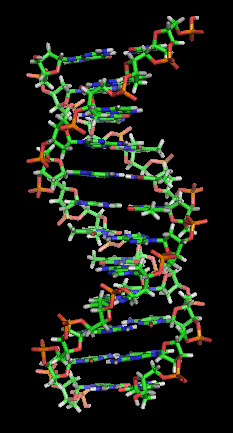
It was April 25, 1953, when James Watson and Francis Crick dropped a short yet revolutionary paper in Nature — one that would forever alter how we think about life itself. In it, they unveiled the double helix structure of DNA, cracking open fundamental mysteries of biology and heredity and reshaping our grasp of life's essential building blocks.
What made their model so transformative? It laid bare the mechanisms by which genetic information is stored, transferred, and replicated within living organisms. Far more than a single scientific achievement, this discovery launched an entirely new era in both medicine and biology, becoming the bedrock upon which modern genetics, biotechnology, and forensic science would be built. The ripple effects have driven remarkable progress in how we diagnose, treat, and understand diseases.
So what exactly did Watson and Crick describe? Picture two intertwined strands spiraling around one another in a double helix, connected by complementary base pairs — adenine pairing with thymine, guanine pairing with cytosine — like rungs on a twisted ladder. This beautifully elegant structure, governed by its specific base-pairing rules, accounted for both the remarkable stability of genetic material and the mechanism by which it could be faithfully copied. That dual explanation was the critical key to unlocking the science of heredity.
No breakthrough happens in isolation, and this one was no exception. The discovery grew out of contributions from numerous scientists, among them Rosalind Franklin, whose X-ray diffraction images of DNA delivered crucial insights that helped shape the final model. Franklin's role wasn't fully acknowledged at the time, though her work has since earned the long-overdue recognition it deserves. The whole endeavor stands as a powerful reminder of how shared knowledge and collective scientific pursuit can change the world.
The implications of what Watson and Crick achieved rippled outward for decades, ushering in the age of molecular biology. Their work paved the way for genetic engineering, DNA fingerprinting, the Human Genome Project, and gene therapy — advances that continue to shape science and medicine today.
Fun Facts:
- This discovery was published in the Nature journal on April 25, 1953
- Watson and Crick described the structure of DNA as a double helix with base-pairing rules
- Other key contributors included Rosalind Franklin, whose X-ray images were vital
- Impact: Revolutionized biology, genetics, medicine, and biotechnology
- The original paper was only one page long, yet it's one of the most influential scientific documents ever published.