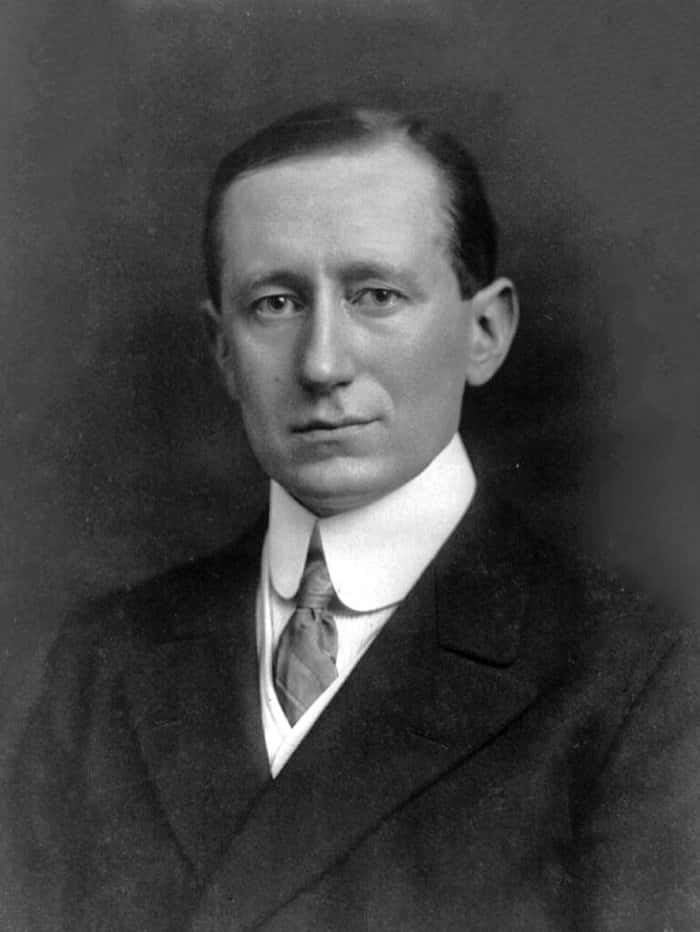
On April 25, 1874, in Bologna, Italy, the world welcomed Guglielmo Marconi—a man who would go on to reshape how humanity communicates. Though largely self-taught, Marconi rose to become one of the towering figures in the story of modern communication. While many dismissed the notion of transmitting messages without physical wires, his relentless pursuit of that very idea would eventually earn him recognition as the "Father of Radio."
Marconi had a functioning wireless telegraphy system up and running by 1895, one capable of sending signals across impressive distances. Then, in 1901, he pulled off what many thought impossible: transmitting the first transatlantic radio signal, sent from Cornwall, England, all the way to Newfoundland, Canada. This landmark achievement demonstrated that wireless signals were not bound by the curvature of the Earth—they could travel beyond the horizon. The impact was felt worldwide almost immediately. Whether it was improving safety at sea or transforming military communication, Marconi's breakthroughs fundamentally changed global connectivity. His enterprise, the Marconi Wireless Telegraph Company, grew into a major player in the development of early radio technology.
The world took notice of Marconi's pioneering work in a big way. In 1909, he received the Nobel Prize in Physics, an honor he shared with Karl Ferdinand Braun, a German physicist. From the groundbreaking transatlantic radio transmission in 1901 to his Nobel recognition in 1909, Marconi built the foundation upon which virtually every form of wireless communication we depend on today was constructed.
Fun Facts:
- Born on April 25, 1874, in Bologna, Italy
- Significant achievement: developed the first long-distance wireless telegraph
- The first transatlantic signal was sent in December 1901
- He received a Nobel Prize in Physics in 1909
- When the RMS Titanic sank in 1912, it was Marconi's wireless system that transmitted the ship's distress calls, proving the critical value of radio communication at sea. His technology played a pivotal role in saving hundreds of lives, underscoring the life-saving potential of his work.