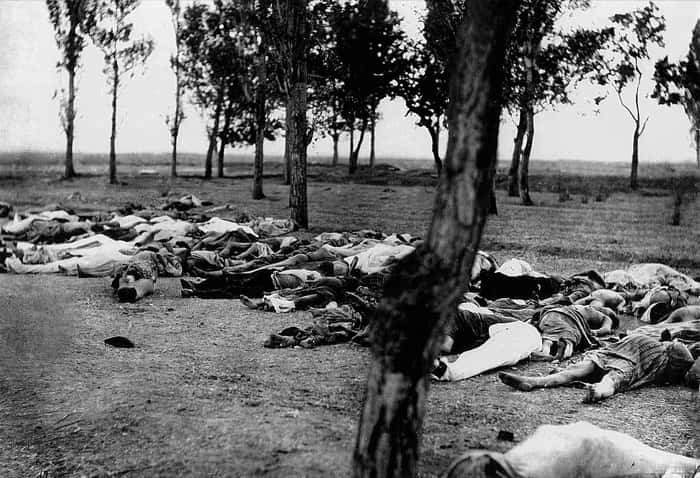
On April 24, 1915, what would become one of the earliest modern genocides began to unfold as the Ottoman Empire launched a deliberate, organized campaign of mass killings, forced marches, and deportation against its Armenian population. That fateful day saw the arrest of hundreds of Armenian professionals, intellectuals, and community leaders in Constantinople (modern-day Istanbul) — the opening act of a savage drive to wipe out the Armenians within the empire's borders, ultimately claiming around 1.5 million lives.
The Young Turks, who controlled the Ottoman government, viewed Armenians as a dangerous security threat amid the upheaval of World War I. Leveraging accusations that Armenians were allied with Russia, they exploited wartime chaos as cover for carrying out a premeditated extermination plan. Armenian leaders across the empire were swept up in a wave of widespread arrests.
Forced onto grueling marches stretching hundreds of miles through the Syrian desert, Armenian deportees were left with neither food nor water. The devastating combination of mass killings, rampant disease, and severe starvation claimed countless lives along the way. Those who somehow endured these horrors were funneled into concentration camps deliberately designed to maintain brutal, inhumane conditions. Throughout this period of violence, entire communities — dozens of them — were wiped from existence, while women and children suffered terrible mistreatment.
Even though foreign missionaries and diplomats recorded what was happening, the world's major powers largely stood by and did nothing. Years later, Raphael Lemkin would coin the very word "genocide," pointing to the Armenian experience as a central inspiration. To this day, Turkey rejects the genocide label despite the overwhelming body of evidence, instead characterizing events as a wartime tragedy that produced casualties on all sides.
Today, the impact of the genocide is commemorated in several powerful ways:
- Memorials stand in Yerevan, Beirut, and Los Angeles.
- Over 30 countries, including the U.S. (since 2021), officially recognize the genocide as a historical fact.
- Survivors' descendants continue advocating for justice and recognition.
The long shadow of these events stretches into the present day, manifesting in persistent tensions between Armenia and Turkey — a stark reminder that historical wounds left unacknowledged never truly heal.