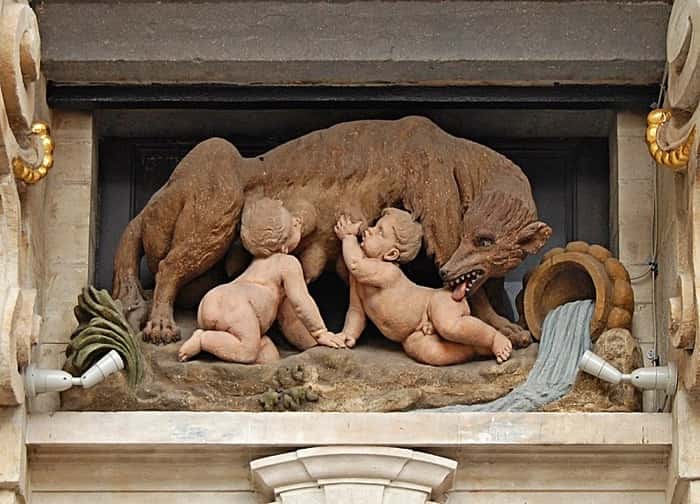
According to Roman legend, the Eternal City of Rome came into being on April 21, 753 BC, when Romulus established it following a turbulent chain of events that culminated in the death of his twin brother Remus. At its core, this is a story about divine fate, bitter rivalry between brothers, and the emergence of a civilization destined to leave an indelible mark on the ancient world and far beyond.
The twins, as Roman mythology recounts, were born to Mars, the god of war, and a Vestal Virgin named Rhea Silvia. Abandoned as infants near the river Tiber, they were rescued by a she-wolf — an act widely regarded as divinely ordained. From there, a shepherd and his wife, themselves guided by divine intervention, took on the role of raising the boys. Over time, the brothers discovered their royal heritage, and this revelation sparked in them a burning desire to build a city of their own.
Though initially bound together by a shared dream, Romulus and Remus soon clashed bitterly over where the new city should stand and who should hold authority over it. What might have been resolved through compromise instead spiraled into violent conflict. The story reaches its tragic climax with Romulus slaying Remus in a ruthless grab for political supremacy — a grim testament to how unchecked ambition can destroy even the closest bonds. Out of this bloodshed, however, Rome rose on Palatine Hill on April 21, 753 BC. Romulus, serving as its first monarch, went on to lay the groundwork for enduring Roman traditions spanning cultural interests, legal doctrine, and military practices.
In the ancient Roman calendar, April 21 held a place of particular reverence as Parilia, a festival rooted in pastoral customs that gradually took on deeper meaning as a commemoration of the city's founding. Adding a layer of intrigue to the mythology, the discovery of human remains on the Palatine Hill dating to the 8th century BC lends some archaeological support to the myth's timeline and fundamental concepts, though many details remain unverified.