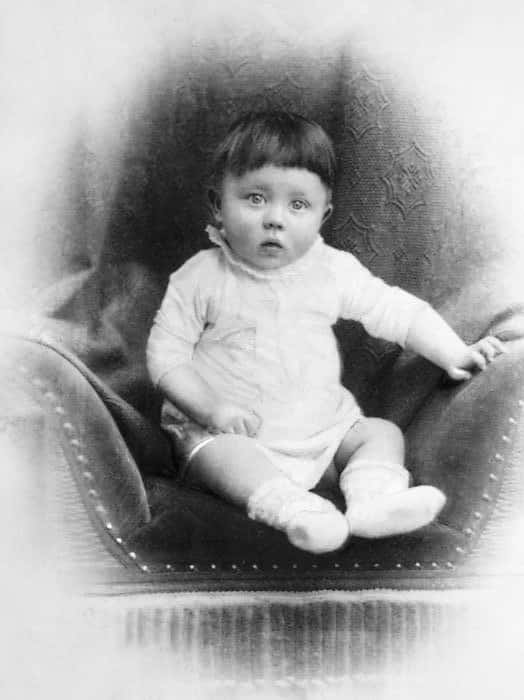
On April 20, 1889, in the small Austrian border town of Braunau am Inn, not far from Germany, a child was born who would grow up to become Nazi Germany's infamous dictator. What seemed like an ordinary birth would set in motion one of the most devastating chapters in the story of humanity.
Hitler's formative years were defined by family turmoil and personal hardship. His father, a customs official, ran the household with strict discipline. Financial difficulties and the deaths of younger siblings cast a shadow over his youth. After his father died in 1903, the family moved to Linz. A pivotal turning point arrived in 1907, when Hitler was rejected by the Academy of Fine Arts of Vienna — a failure that left him drifting through the city and exposed to the ideological prejudices that would begin taking root in his mind.
The First World War provided Hitler with structure and purpose through his service as a soldier in the German army. Germany's defeat, compounded by the punishing terms of the Treaty of Versailles, only deepened his fierce nationalistic fervor. By the early 1920s, he had launched his political career, channeling widespread postwar bitterness into fuel for the Nazi Party's rise. When he assumed the position of Chancellor in 1933, it was merely the opening move toward absolute totalitarian control and military dominance — setting the stage for the systematic horrors that followed.
While governing Germany, Hitler plunged the world into war by ordering the invasion of Poland in 1939. Driven by ambitions to expand Germany's reach across Europe through military conquest, he sanctioned the targeted elimination of six million Jews, along with millions of other victims, carried out under a framework of racial beliefs in what became known as the Holocaust.
Early military victories bolstered Hitler's territorial ambitions, yet it was precisely this relentless expansionism that ultimately sealed Nazi Germany's fate. As Allied forces closed in on German soil, Hitler took his own life in his Berlin bunker on April 30, 1945, just before the final collapse.
Adolf Hitler's birth set into motion forces that engulfed the world in war, genocide, and unspeakable catastrophe. He stands in history as the very embodiment of evil dictatorship and a wellspring of immeasurable human suffering. His legacy serves as a stark reminder of what happens when hatred, unchecked power, and dictatorial systems are allowed to take hold.