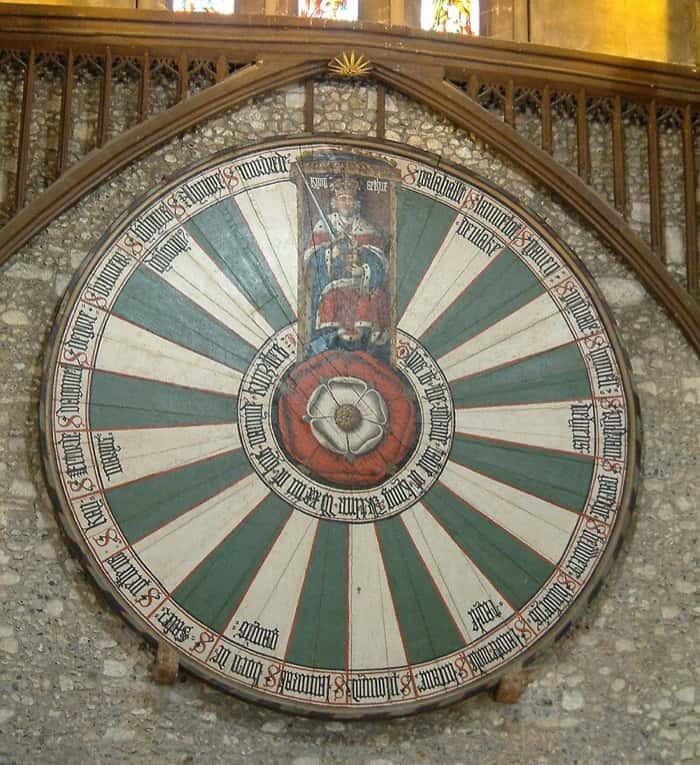
On April 20, 1290, King Edward I hosted a spectacular gathering modeled after the legendary court of King Arthur — a Round Table Tournament thrown in honor of his daughter's engagement. It is thanks to this very event that the Winchester Round Table still hangs in Winchester Cathedral to this day.
Round tables, rooted in the Arthurian legend, were medieval occasions that blended political maneuvering with entertainment. Monarchs embraced these gatherings to commemorate important occasions, wrapping themselves in the heroic virtues associated with Arthur and his noble knights. Edward I, throughout his reign, repeatedly drew on the Arthurian tradition as a tool to elevate his power and prestige. He cast himself as a strong yet just ruler presiding over a united Britain, positioning his kingship as a natural extension of the nation's storied past and fostering a deep sense of continuity and tradition. This deliberate use of Arthurian symbolism lent his reign an air of honor and historical legitimacy, bolstering his authority over Wales and strengthening political alliances forged through marriage.
At a time when chivalry and legend served as potent tools for shaping a royal image, King Edward I staged an extravagant Round Table Tournament to mark the engagement of his daughter Eleanor of England to Alphonso III of Aragon. The event was a public celebration of Princess Eleanor's betrothal to Prince Alphonso, heir to the throne of Aragon. In the world of medieval diplomacy, such alliances were vital instruments for linking England with powerful continental houses. Sadly, the marriage would never come to pass — Alphonso died tragically in August 1291, just a few months afterward. Yet for a brief moment, the proposed union glowed with all the romantic splendor that the age had to offer.
The 1290 Round Table Tournament served as a powerful vehicle for reinforcing royal authority through the lens of myth. Linking Edward I's reign to King Arthur's legacy of valor and unity, the event amplified the monarchy's power and influence. Through chivalric symbolism and ceremonial tradition, it helped shape England's emerging national identity and established a lasting precedent for weaving legend into the fabric of royal imagery.