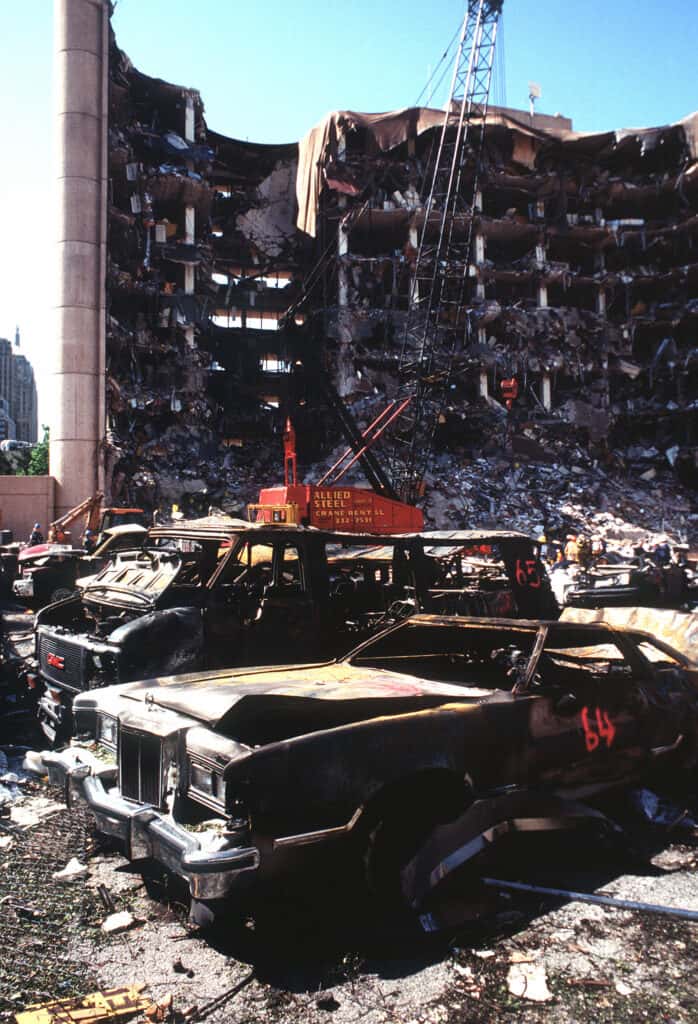
At 9:02 a.m. on April 19, 1995, downtown Oklahoma City was forever changed when a truck bomb exploded outside the Alfred P. Murrah Federal Building with catastrophic force. Timothy McVeigh had parked the vehicle at the site, and when it detonated, 168 lives were lost — 19 of them children who had been in a daycare center inside the building. More than 600 additional people sustained injuries. Up to that point, no act of domestic terrorism on American soil had ever been so deadly. While the bombing sent shockwaves across the entire nation, it also brought to light the extraordinary resilience that defined the Oklahoma City community in its aftermath.
The motivation behind the attack was rooted in anger over how the federal government had handled the Waco siege, a 51-day standoff between federal law enforcement and the Branch Davidians, a religious group — an event that had taken place exactly two years prior, on the same date. Authorities moved quickly: Timothy McVeigh was apprehended within hours of the blast, and his accomplice, Terry Nichols, was taken into custody shortly after. Both men were found guilty for the parts they played in the bombing. McVeigh ultimately faced execution in 2001.
Interesting Facts:
- The blast carried the destructive equivalent of 5,000 pounds of explosives, obliterating a large portion of the nine-story building.
- More than 300 surrounding buildings were damaged by the explosion.
- At the time, it stood as the deadliest act of domestic terrorism in U.S. history.
- To honor the victims and their families, the Oklahoma City National Memorial was established as a solemn tribute to those who perished.
- In the wake of the tragedy, national security policies underwent significant transformation — stricter anti-terrorism laws were enacted, vigilance against domestic threats was heightened, and a broad reevaluation of the balance between security and civil liberties took place. The attack also prompted significant changes in federal building security measures.
- The Oklahoma City National Memorial stands today as both a tribute to the lives lost and a powerful reminder of the resilience shown by those who were affected.