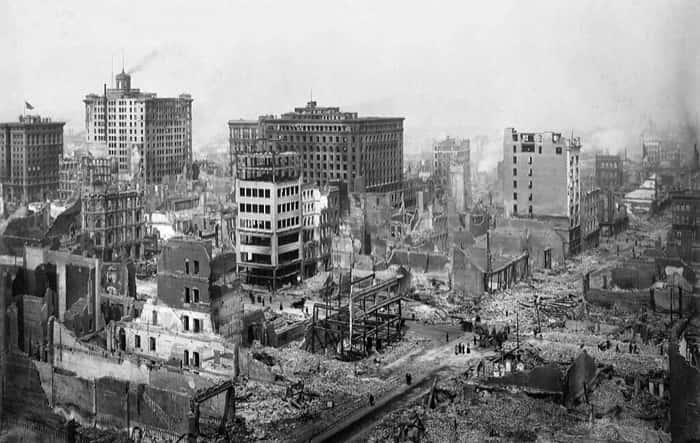
The morning of April 18, 1906, began with a nightmare. At 5:12 AM, a massive magnitude 7.9 earthquake ripped through San Francisco, shaking the city to its core. Originating along the San Andreas Fault, the disaster devastated Northern California and sparked relentless fires that burned for days afterward. When it was all over, more than 3,000 people had perished, and over 80% of San Francisco lay in ruins—nothing but rubble and ash.
Though the epicenter sat near San Francisco, the tremors reached far beyond the city. People felt the shaking as far north as Eureka, as far south as the Salinas Valley, and eastward into Nevada. A forceful foreshock rattled the region just seconds ahead of the main event, which itself lasted approximately 42 seconds. In under a minute, structures collapsed, gas lines ruptured, and the city's entire infrastructure gave way.
California's San Andreas Fault, that massive fracture cutting through the state, underwent dramatic movement during the event. In certain locations, the ground shifted horizontally by as much as 28 feet—displacements of up to 28 feet that reshaped the landscape in an instant. The sudden release of built-up tension within the Earth's crust ruptured nearly 300 miles of the fault line, making it one of the most significant geologic events in American history.
As devastating as the earthquake itself was, the fires that followed proved far worse. Broken gas mains touched off blazes throughout the city, and ruptured water lines left firefighters utterly helpless to combat them. More than 30 separate fires raged out of control over three days, devouring 490 city blocks and leveling 25,000 buildings. Property losses soared past $400 million—a figure equivalent to over $10 billion today.
The catastrophe displaced over 250,000 residents, representing more than half of San Francisco's population at the time. Survivors crowded into refugee camps and improvised shelters set up across Golden Gate Park, Presidio, and other open spaces. Relief operations launched almost immediately as the community rallied together. Military troops stepped in to provide aid, maintain order, and set up food and medical stations. Although initial attempts were made to minimize the scale of the disaster in order to safeguard the city's business interests, the 1906 earthquake ultimately drove nationwide recognition of seismic dangers and highlighted the urgent need for improved urban planning and building regulations.
From the ashes, San Francisco rebuilt itself. By 1915, the city's recovery had progressed enough to host the Panama–Pacific International Exposition—a powerful symbol of its rebirth.