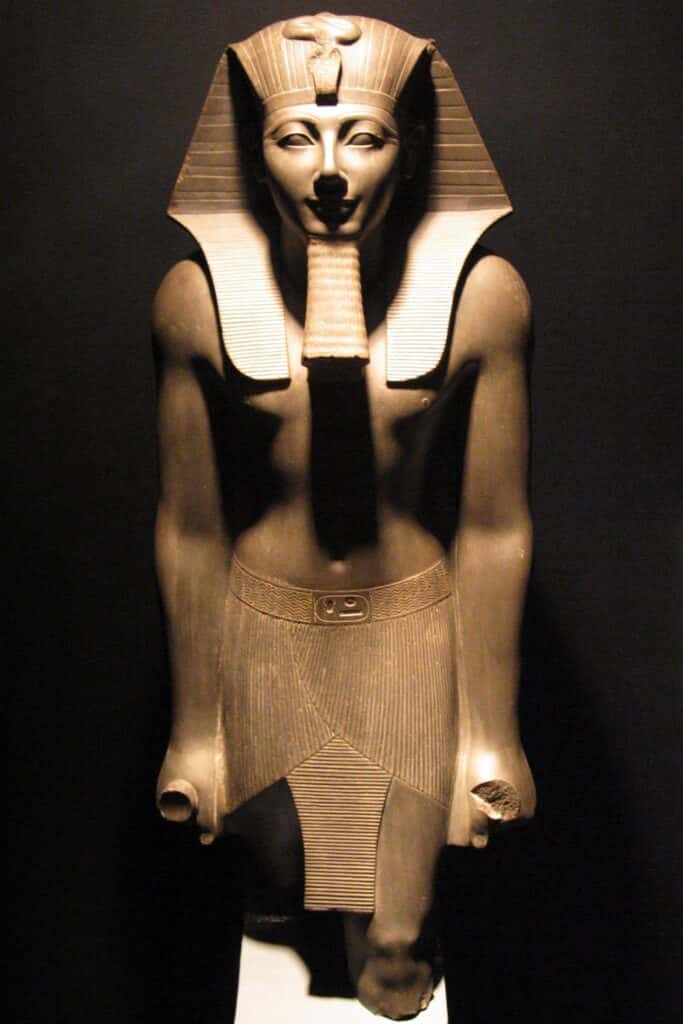
The Canaanite coalition, commanded by the King of Kadesh, suffered a crushing defeat at the hands of Pharaoh Thutmose III at Megiddo on April 16, 1457 BCE. We know the details of this ancient clash because Tjaneni, Thutmose's royal scribe, carefully recorded the events and preserved them on the walls of the Karnak Temple.
Sitting in northern Israel, Megiddo held enormous strategic value in the ancient world — it was a bustling center that controlled critical trade routes linking Egypt and Mesopotamia. When the Canaanites rose up against Egyptian authority, Thutmose III showcased his remarkable military talent by marching his troops through the dangerous Aruna Pass to catch his enemies off guard. His bold choice to navigate the Aruna Pass defied general opinion, yet it proved to be a groundbreaking stroke of military brilliance that strategists still study today.
The outcome of the battle was decisive. Emerging from the Aruna Pass, Thutmose III's well-drilled forces — archers, charioteers, and infantry soldiers — caught the Canaanite defenders completely off guard and overwhelmed them. What followed was a grueling seven-month siege of Megiddo, during which Thutmose III waged psychological warfare by allowing refugees to stream into the city until its resources were completely drained. Through relentless patience, he starved the city into submission, ultimately forcing its defenders to surrender.
The Battle of Megiddo stands as a pivotal historical event that laid the groundwork for numerous essential military practices. To this day, scholars examine the deceptive tactics, swift operations, and determined siege techniques that Thutmose III employed there. The textual reliefs at Karnak Temple serve as a lasting testament to the battle and represent the original foundation of military historiography. Intriguingly, the name 'Megiddo' would eventually evolve into 'Armageddon' — a term deeply embedded in Judeo-Christian theology, signifying prophesied apocalyptic warfare.