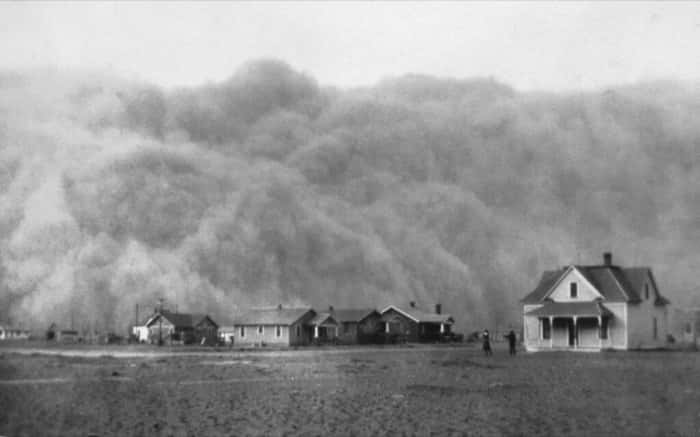
On April 14, 1935, the Great Plains experienced an environmental catastrophe that would etch itself into the nation's memory as one of the most tragic events in U.S. history. Carrying an astonishing 300 million tons of topsoil, the ferocious Black Sunday storm tore across Oklahoma, Texas, Kansas, and Colorado. Winds surging past 60 miles per hour plunged the afternoon sky into total darkness.
Visibility dropped to virtually nothing — people caught outdoors reported being unable to see their own hands held directly in front of their faces. The choking wall of dust was so dense that birds suffocated and dropped from the sky mid-flight. Inside their homes, residents desperately pressed wet cloths against doorways and window openings, yet the relentless dust still found its way in, blanketing every surface with a layer of fine silt.
Far from being a freak occurrence, Black Sunday represented the catastrophic peak of years of avoidable ecological ruin. Reckless farming practices had stripped the once fertile plains of their resilience, and when severe drought set in, the land was left utterly defenseless. That Sunday afternoon, powerful winds seized the parched topsoil and hurled it skyward in massive clouds that blotted out the sun for hours on end.
The destruction left in the storm's wake was staggering:
- Farmers could only stand by as feet of dust swallowed what remained of their crops
- Livestock went blind or suffocated from relentless exposure to the swirling dust
- Respiratory ailments, particularly "dust pneumonia," spread uncontrollably, hitting children the hardest
- Thousands of families gathered whatever meager belongings they could carry and headed west, earning the name "Okies."
The horror of Black Sunday jolted Americans into action. Confronted with the enormity of the crisis, the federal government established the Soil Conservation Service (Natural Resources Conservation Service) to promote improved land management techniques. Practices such as crop rotation and contour plowing were introduced as safeguards against future ecological disasters. To this day, Black Sunday stands as a stark testament to nature's fury and a warning about the dire consequences of environmental mismanagement.