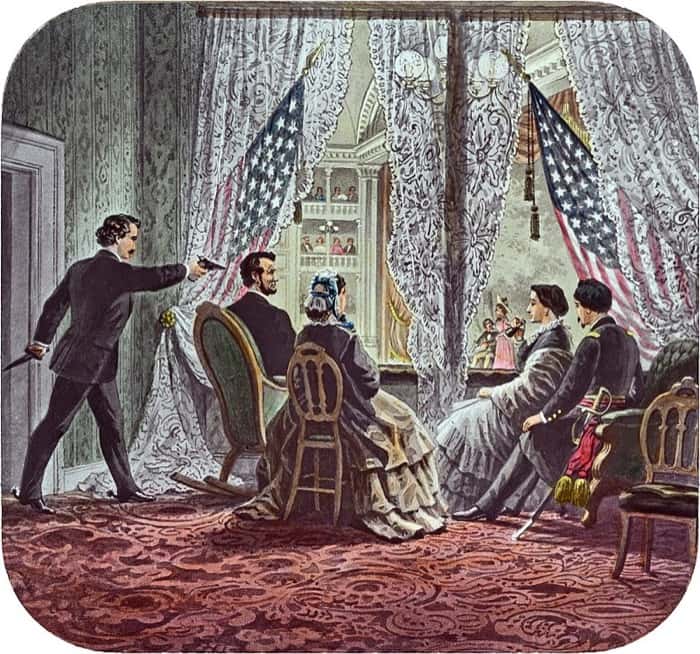
On the evening of April 14, 1865, a single gunshot inside Ford's Theatre in Washington, D.C., changed the course of American history forever. President Abraham Lincoln fell to an assassin's bullet fired by John Wilkes Booth, a man driven by deep Confederate sympathies. With the Civil War drawing to a close, the killing shattered hopes for a smooth path toward reconciliation and thrust the country into a deeply unsettling chapter of doubt and disorder.
The night before, Washington's streets had buzzed with spring celebrations marking the Confederate surrender, and a festive mood still hung over the capital. Eager for a momentary reprieve from the crushing weight of wartime leadership, President Abraham Lincoln headed to Ford's Theatre to enjoy the comedy Our American Cousin, accompanied by his wife, Mary Todd Lincoln, along with their guests, Major Henry Rathbone and Clara Harris. What none of them realized was that Booth — a well-known actor and devoted Southern loyalist — had carefully orchestrated every detail of his plot. At precisely 10:15 PM, he slipped into the presidential box, barricaded the door behind him, and fired a single shot into Lincoln's skull at point-blank range. Chaos erupted as the theater filled with screams; Booth slashed Rathbone with a dagger, then vaulted onto the stage, shouting "Sic semper tyrannis!" (Thus always to tyrants) before vanishing into the night.
Lincoln was rushed across the street to the Petersen House, where physicians frantically administered emergency medical treatment for his devastating wounds. For nine agonizing hours, the President never regained consciousness, finally succumbing to his injuries at 7:22 AM on April 15. Word of his death spread rapidly across the nation, casting an overwhelming shadow of grief over the entire country. As his funeral train carried him home to Springfield, Illinois, thousands upon thousands of mourners gathered along the railroad tracks to pay their respects, while churches held solemn services and local businesses shuttered their doors in tribute.
Lincoln's murder robbed the nation of his steady hand at a pivotal moment and dismantled his blueprint for a merciful Reconstruction. Andrew Johnson, stepping into the presidency, simply did not possess the political skill and moral insight that had defined Lincoln's leadership. The consequences were profound — relations with Congress grew increasingly hostile, and far harsher terms were forced upon the defeated South. Yet through the very violence that took his life, Booth's act paradoxically elevated Lincoln into a tragic hero, forever securing his place as one of history's most powerful symbols of freedom.