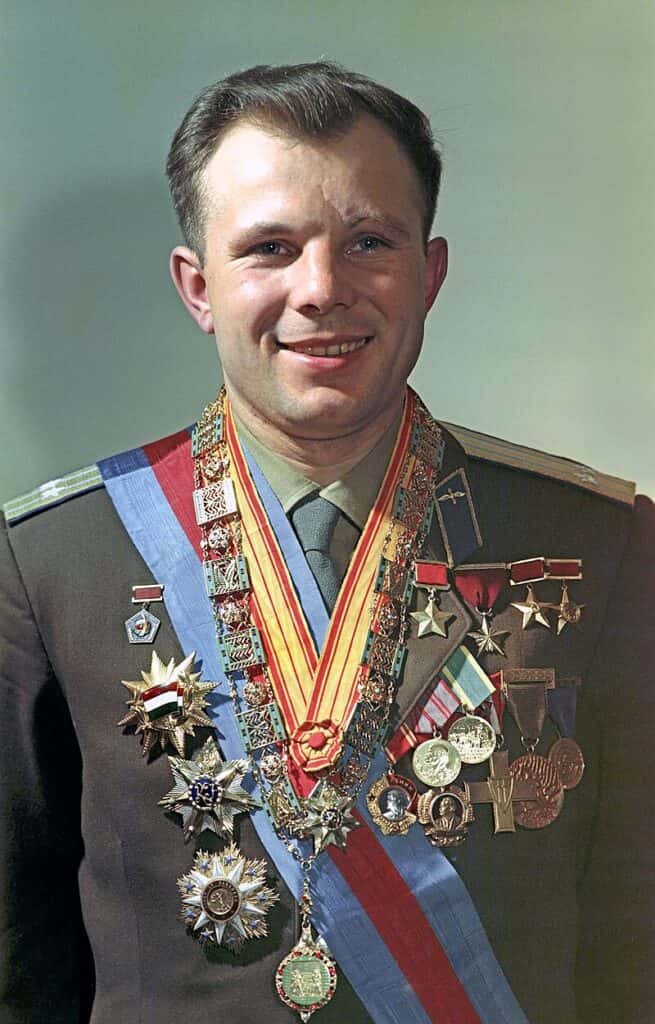
It took just 108 minutes to change the course of human history. On April 12, 1961, Yuri Gagarin climbed aboard the Vostok 1 and rocketed beyond Earth's atmosphere, securing his place — and the Soviet Union's — in the annals of civilization forever. No human being had ever ventured into space before. The achievement stood as a testament both to Soviet engineering prowess and to Gagarin's remarkable personal courage. Yet the roots of this extraordinary moment stretched back to a far darker chapter: the Second World War.
Rocket technology was born out of wartime necessity, originally developed as a means of delivering explosive payloads across great distances. It didn't take long, however, for visionaries to recognize that these missiles could serve purposes far beyond destruction. When the war ended, the US and the USSR stood as the world's two dominant superpowers. Their wartime alliance dissolved rapidly into intense rivalry, and as rockets opened the door to exploring the cosmos, space became the ultimate arena where both nations battled to prove their superiority.
Hurtling through orbit at more than 17,000 miles per hour, Gagarin circled the entire planet once during his brief but groundbreaking flight. Getting him up there had required the Soviets to accept enormous risks, and bringing him home posed dangers no one had ever faced. The reentry and landing process was fraught with unknowns. To ensure his safety, Gagarin ejected from the spacecraft during descent, drifting back to the ground beneath a parachute, while a computer guided the vessel itself back to Earth. Though he never made another trip to space, Gagarin lived out the rest of his life celebrated as a hero.