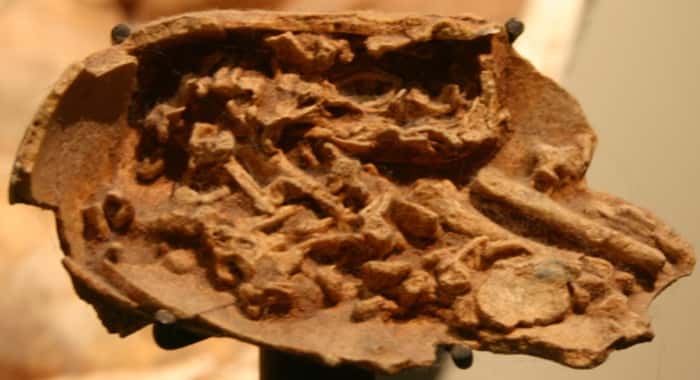
What if you could peer inside a dinosaur egg and watch life taking shape 70 million years before our time? That's essentially what became possible on April 11, 2013, when paleontologists working in China's Guangdong Province revealed something truly breathtaking—a clutch of fossilized dinosaur eggs containing remarkably well-preserved embryos. Hailing from the Late Cretaceous period, these 70-million-year-old specimens immediately ranked among the most important dinosaur embryo finds in the history of paleontology. The level of preservation was nothing short of staggering: fully articulated skeletons and rare soft tissue impressions gave researchers an unparalleled window into how dinosaurs developed before emerging from their shells.
The eggs belonged to Oviraptors, a feathered dinosaur species that shared notable characteristics with modern birds. What made this 70-million-year-old find so extraordinary was the pristine condition of the embryo remains, which were maintained in virtually perfect detail.
- Baby dinosaurs were captured in their egg-nesting positions at various points during development, granting scientists a remarkable view into the embryonic world of these prehistoric animals. The find also illuminated Oviraptor nesting behaviors and how these creatures may have cared for their young.
- Skin impressions survived the fossilization process, revealing a rough, jagged texture reminiscent of amphibian skin. This intriguing characteristic hints at a possible evolutionary connection between dinosaurs and amphibians, adding yet another layer to the already complex evolutionary narrative surrounding these ancient animals.
- Teeth and bones representing a wide spectrum of developmental phases—from the earliest embryonic stages all the way through to near-hatching—were present among the fossils. Having access to such a comprehensive developmental timeline gave researchers an exceptionally rare and invaluable look at how these creatures grew and matured inside their eggs.
Rather than risk damaging the fragile specimens, scientists employed specialized 3D scanning technology to examine the fossils without breaking them open. The embryos captured various developmental stages, hinting that oviraptors may have adopted a staggered hatching strategy—much like many bird species do today. This research yielded the strongest evidence yet concerning dinosaur embryonic development and further cemented the evolutionary connection between dinosaurs and their modern avian descendants.
Prior to this landmark find, the vast majority of dinosaur embryo fossils had been recovered in fragmented or poorly preserved condition. These exceptional specimens delivered crucial new understanding in several key areas:
- The process of dinosaur development prior to hatching
- Evolutionary connections linking dinosaurs to modern birds
- The nesting behaviors characteristic of Oviraptors
Today, the fossils reside at the Heyuan Museum, where they continue to fuel scientific efforts to unlock the secrets of the prehistoric world. As lead researcher Dr. Li has noted, these specimens provide a rare portal into ancient life—preserving delicate traces of a world that vanished millions of years ago.