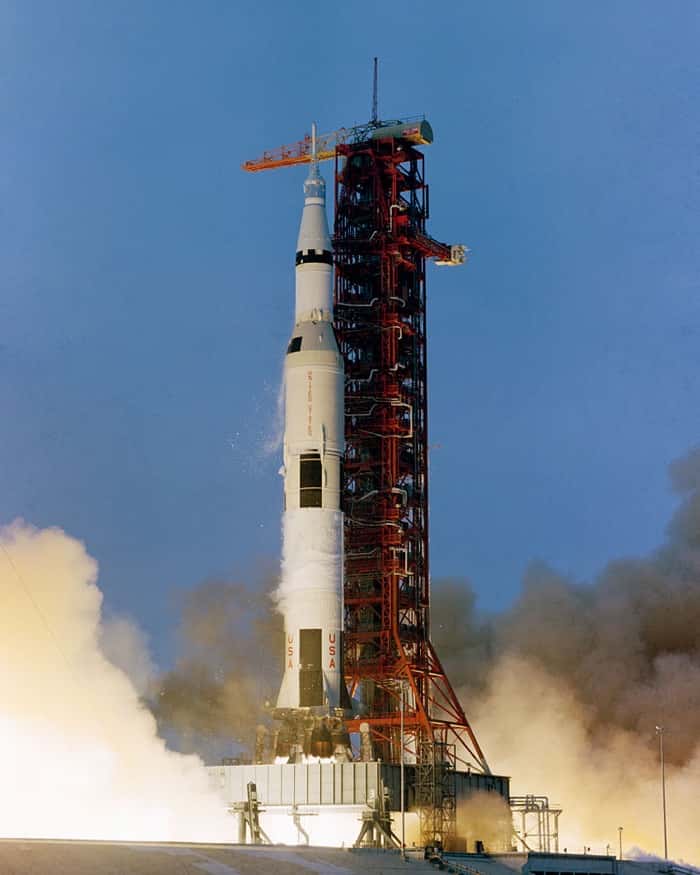
On April 11, 1970, at 2:13 p.m. EST, the Apollo 13 mission roared to life from Kennedy Space Center in Florida. Originally designed to put astronauts on the lunar surface for the third time, the flight instead became what many consider the most gripping rescue operation in the history of space exploration. Just two days after liftoff, an oxygen tank explosion plunged the crew into a life-threatening emergency, demanding extraordinary ingenuity from both the astronauts and NASA to bring everyone home alive.
Apollo 13 fell under NASA's broader Apollo program — a campaign dedicated to landing humans on the Moon and returning them safely — building on the triumphs of Apollo 11 and Apollo 12. Commanding the mission was astronaut Jim Lovell, joined by Jack Swigert and Fred Haise, who filled the roles of Command Module Pilots and Lunar Module Pilots, respectively. Their planned destination was the Fra Mauro highlands region of the Moon, a site that held particular scientific appeal because of its unique geological features. Powering the spacecraft's climb through the atmosphere was the mighty Saturn V rocket, while the crew relied on two vessels: the Command Module Odyssey and the Lunar Module Aquarius.
Beyond the technical dimensions, the crew's experience was deeply human. Fear, uncertainty, and sheer exhaustion weighed on them, yet determination, teamwork, and hope carried them forward — emotions that proved just as central to the mission as any engineering challenge. Even before launch, complications emerged: Jack Swigert stepped in as Command Module Pilot to replace the originally assigned astronaut Ken Mattingly, who had been exposed to German measles. These early setbacks hinted at the difficulties that lay ahead, though the crew pressed on toward the Moon with confidence intact.
Everything proceeded along the planned trajectory until April 13, when an explosion ripped through an oxygen tank in the Service Module. From the spacecraft, mission commander Apollo 13 relayed the now-legendary words to Houston: "Houston, we've had a problem." The blast crippled both the power systems and life-support components, forcing the crew to abandon any hope of a lunar landing and shift their entire focus to one objective — staying alive.
With oxygen, power, and water rapidly draining from the crippled spacecraft, the astronauts took refuge in the Lunar Module, which became their makeshift lifeboat. Rationing every resource, they devised creative workarounds to one problem after another. In one particularly ingenious fix, they fashioned an adapter from duct tape and plastic bags so that the Command Module's square carbon dioxide scrubber cartridges could fit the Lunar Module's round receptacles — a modification that was critical for preventing dangerous carbon dioxide buildup. Back on the ground, NASA engineers worked around the clock to walk the crew through these and other vital repairs.
Harnessing the Moon's gravity, the Apollo 13 crew pulled off a slingshot maneuver that bent their trajectory back toward Earth, overcoming obstacle after obstacle along the way. Enduring freezing cold conditions, dehydration, and mounting fatigue, the astronauts finally pierced Earth's atmosphere on April 17 and splashed down safely in the Pacific Ocean.