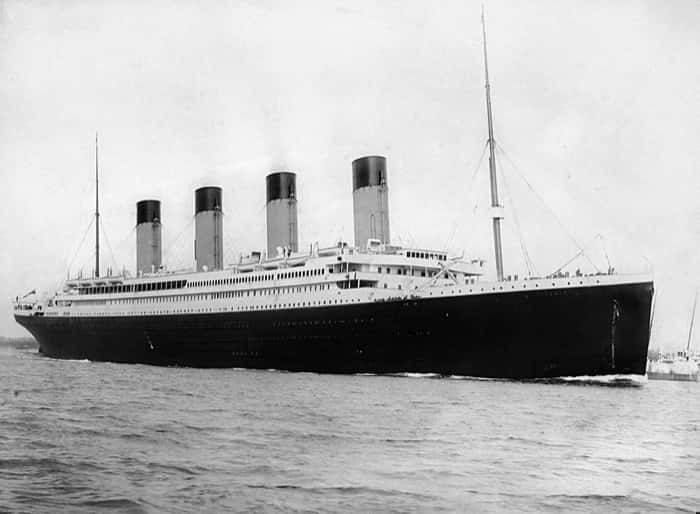
On April 10, 1912, the RMS Titanic departed from Southampton, England, beginning a maiden voyage that would etch itself into history as one of the sea's greatest tragedies. This floating palace — widely celebrated as the largest and most elegant ocean liner of its era — carried over 2,200 passengers and crew, none of whom could have imagined the disaster that lay ahead.
Built by the White Star Line, the Titanic was nothing short of an engineering masterpiece, conceived to transform the standards of both luxury and safety along Atlantic routes. Engineers had equipped the vessel with advanced watertight compartments and a reinforced hull design, innovations so celebrated that the ship's promoters boldly declared it unsinkable. Beyond the technology, the ship dazzled with breathtaking stairwells, elegant dining areas, and lavish first-class accommodations that showcased its grandeur. Even the third-class quarters held special significance, offering many immigrants a gateway to the American dream.
Setting out from Southampton, the Titanic made stops at Cherbourg, France, and Queenstown, Ireland, before charting its course toward New York. Among those on board were several influential figures, including business executive John Jacob Astor IV and socialite Margaret "Molly" Brown.
As the Titanic crossed the North Atlantic at high speed, multiple vessels sent warnings about icebergs in the area. Then, on the evening of April 14, catastrophe struck — the ship collided with an iceberg that tore through the hull, sending water rushing into multiple compartments. Within hours of that fateful impact, the Titanic slipped beneath the waves, claiming the lives of more than 1500 passengers and crew members. A devastating shortage of lifeboats combined with dangerously cold ocean temperatures sealed the fate of so many souls.
The shockwaves from this disaster rippled far beyond the immediate tragedy, prompting sweeping reforms in maritime regulations. Lifeboat requirements became far more stringent, and the International Ice Patrol was established to help avert future catastrophes. What began as a celebrated departure on April 10, 1912, has since evolved into one of the most well-known and studied incidents in history — a sobering testament to nature's power and the limitations of human technology.