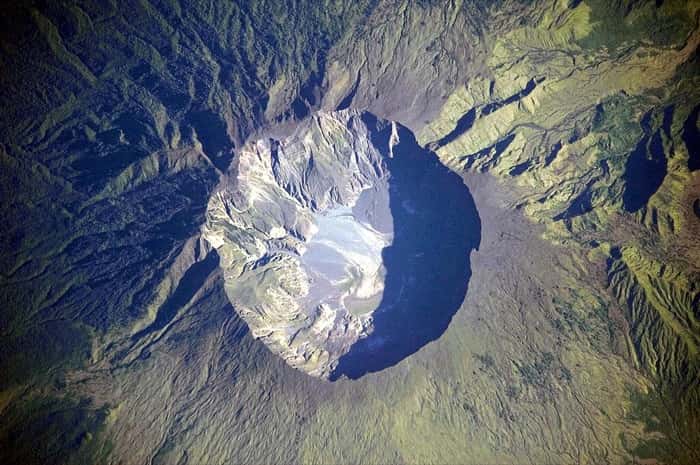
On April 10, 1815, the Indonesian island of Sumbawa became ground zero for the most powerful volcanic eruption in recorded history. Mount Tambora exploded with devastating force, killing over 71,000 people and triggering a worldwide climate catastrophe that would come to be known as the "Year Without a Summer."
The mountain had been stirring since 1812, awakening after centuries of silence. Pressure built steadily until, by April 1815, a massive explosion was imminent. On the evening of April 10, everything changed. The eruption detonated with such ferocity that the sound traveled more than 1,600 miles. Pyroclastic flows and thick ash swallowed villages whole, a devastating tsunami crashed into coastal areas, and ash blanketed vast stretches of Southeast Asia.
The initial blast killed approximately 10,000 people on the spot—but that was only the beginning. In the weeks after the eruption, the death count soared as famine and disease tore through Sumbawa, Lombok, and Bali. At least 60,000 additional lives were lost as ash obliterated crops, poisoned water supplies, and drove widespread starvation.
What happened next proved that Tambora's reach extended far beyond Southeast Asia—its consequences went global. Enormous quantities of ash and sulfur dioxide shot into the stratosphere, forming a veil that blocked sunlight and drove down temperatures worldwide. The climate disruption was staggering. By June of 1816, snow was falling across New York and New England. Across the Atlantic, Europe descended into crop failures, food riots, and waves of migration—a stark demonstration of just how far-reaching and unforeseen the eruption's impact truly was.
As the largest known eruption of the last 2,000 years, Mount Tambora carved an extraordinary legacy into the historical record. Its reverberations touched agriculture, art, literature, and science alike—a powerful testament to nature's ability to reshape the trajectory of human civilization in a single, catastrophic moment.