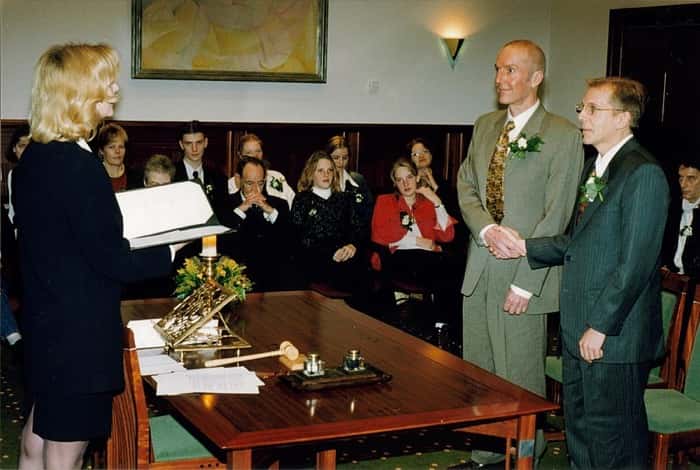
The date April 1, 2001, holds a permanent place in the story of equal rights — a day that reshaped what legal recognition of love could look like. It was on this day that the Netherlands became the first country to legalize same-sex marriage, striking a powerful blow for equality and social justice. The moment stands as proof that when people rally behind progress, discrimination gives way to love and meaningful change remains within reach.
The Netherlands had long cultivated a reputation for progressive social policies, yet the road to legal same-sex marriage recognition was far from smooth. From the 1990s onward, LGBTQ+ activists poured tireless energy into the cause, driven by an unwavering commitment to equal rights that ultimately culminated in full marriage equality and genuine legal parity. While minor opposition surfaced along the way, the Dutch public broadly embraced this sweeping legal transformation. Statistical surveys revealed strong popular support for the measure, and multiple political organizations united to shepherd the bill to success. In passing this legislation, the nation sent an unmistakable message: every form of love deserves equal recognition.
On April 1, 2001, the day the law officially went into force, same-sex couples gained not only full marriage rights but also adoption rights — going well beyond what the earlier registered partnership framework had offered. That morning, Amsterdam's mayor, Job Cohen, who played a central role in the movement, presided over the very first formal same-sex marriages at the city hall. The four couples married that morning — three male couples and one female couple — became enduring symbols of love and perseverance.
What happened in the Netherlands didn't stay in the Netherlands. The Dutch decision set off a worldwide ripple effect, inspiring nation after nation to follow suit in the years after 2001 by legalizing same-sex marriage and broadening LGBTQ+ rights. Among the early adopters were Belgium, Spain, Canada, and South Africa. By the 2020s, more than 30 nations had embraced marriage equality. Beyond reshaping global conversations around LGBTQ+ issues, the Netherlands' groundbreaking choice proved something essential: in open, democratic societies, full legal equality is not merely possible — it is inevitable.