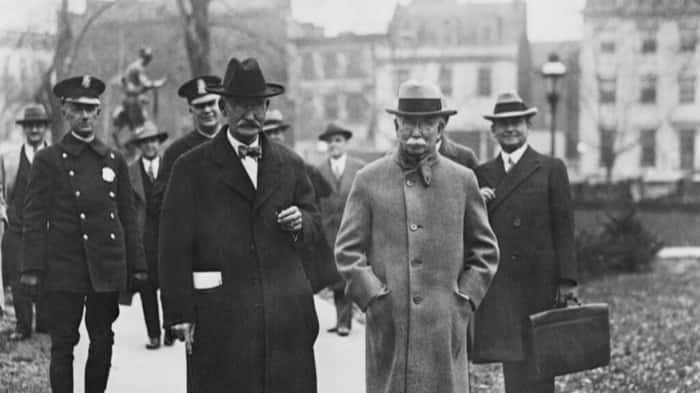
During the presidency of Warren G. Harding, Albert B. Fall held a position as a cabinet secretary. His tenure, however, ended in disgrace when he was convicted of taking a bribe in that role. Notably, Albert B. Fall earned the infamous distinction of being the first person ever imprisoned for criminal conduct committed while serving in the presidential cabinet.
The early 1920s were marked by widespread corruption within President Harding's cabinet. Edward Doheny, who headed the Pan-American Petroleum and Transport Company, sought a favor from Albert B. Fall — specifically, he wanted an oil contract covering California's Elk Hills naval oil reserve for his company. Albert B. Fall agreed to the arrangement and received $100,000 interest-free in return. The Elk Hills site, along with the Teapot Dome naval oil reserve in Wyoming, had originally been reassigned to the interior Department. It didn't take long, though, for Albert B. Fall to recognize the enormous personal profit he could gain by leasing these lands out to private businesses.
An investigation by the Senate Public Lands Committee got underway in October 1923, probing allegations of corruption. What investigators uncovered was damning: Albert B. Fall had pocketed not just the $100,000 bribe but an additional $300,000 as well. On top of that, the president of Mammoth Oil had also funneled money to Albert B. Fall in connection with the Teapot Dome oil reserve in Wyoming.
The Supreme Court ultimately stepped in during 1927, lawfully restoring the oil fields to the U.S. government. Two years later, in 1929, Albert B. Fall was found guilty of bribery and handed a one-year prison sentence. On top of that, a $100,000 fine was levied against Albert B. Fall. Doheny, for his part, barely managed to avoid prison time. Sinclair, on the other hand, was convicted of showing contempt toward congress and tampering with the panel of judges.