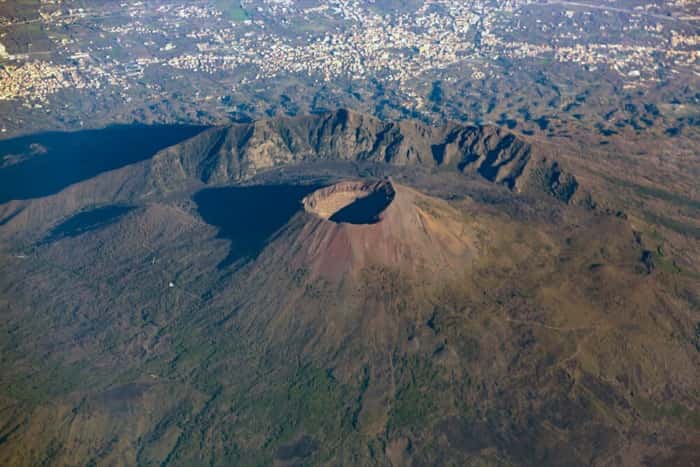
Situated along the Gulf of Naples, Mount Vesuvius stands as one of history's most infamous active volcanoes. Despite erupting on numerous occasions, the region surrounding it has attracted dense settlement since ancient times — and for good reason. The volcano's fertile soil proved irresistible to generations of inhabitants. It's this very popularity that made the 79 AD eruption so catastrophic, wiping out Pompeii along with a number of other Roman settlements.
Scholars continue to debate which month the eruption actually took place. The traditional account, though, holds that Mount Vesuvius began showing signs of unrest on August 23, followed by a full-blown eruption spanning August 24 and August 25. What makes the timing especially striking is that the first date coincided with the festival of Vulcan — the Roman god of fire, volcanoes, and metal-smithing. Fittingly, the very name of the volcano traces back to this same deity.
The eruption of Mount Vesuvius in 79 AD occupies a unique place in the popular consciousness for several reasons. Among them is the death of Pliny the Elder, a well-known Roman author who perished as a direct result of the disaster. He was serving as an official of the Roman navy at the time, which put him in a position to respond when he learned that one of his friends was stranded at Stabiae, a seaside resort.
Tragically, the rescue mission went horribly wrong. Not only did Pliny and his crew fail to reach his friend, but they themselves became trapped when the wind turned against them. A plume of hot toxic gases eventually overtook the group, and Pliny succumbed — his chances of survival made worse by the fact that he was an overweight individual who suffered from a chronic respiratory condition.
Perhaps even more significant, however, is that the eruption entombed both Pompeii and Herculaneum beneath layers of volcanic debris. When these sites were uncovered in the late 18th century and early 19th century, they offered remarkable insight into the Roman culture of the Principate. Yet for most people, it's not the archaeological revelations that linger in the mind — it's the haunting plaster casts of those who weren't able to flee the eruption.