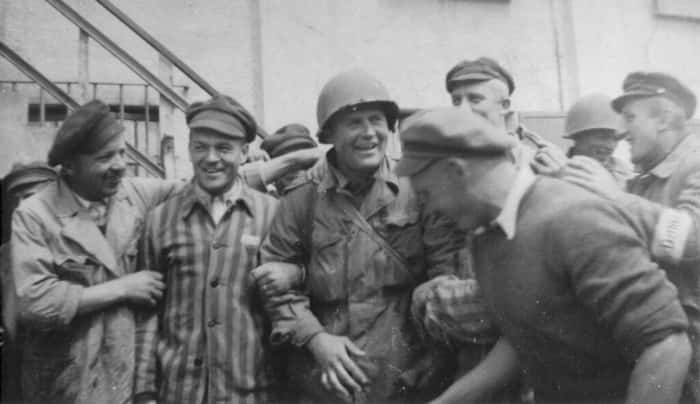
The long, horrifying ordeal at Dachau finally came to an end on April 29, 1945, when the U.S. Army liberated 31,601 people from the concentration camp. Dachau holds the grim distinction of being the very first concentration camp the Nazis established.
A mere five weeks after Adolf Hitler rose to power as Chancellor of Germany in 1933, construction of the camp was completed. At first, it served as a detention facility for political enemies of the Nazi regime, including Social Democrats and German communists. Before long, the camp also became a dumping ground for those the regime deemed "undesirable" — homosexuals, Jehovah's Witnesses, Roma, and repeat criminals. As the years went on, though, the camp's population shifted, and it became predominantly a place of imprisonment for Jewish prisoners.
Prisoners held at Dachau were forced into slave labor, producing weapons and ammunition for the German Army. Beyond that brutal exploitation, many became unwilling subjects in human medical experiments — experiments that left countless victims dead or permanently crippled. Outright execution claimed many more lives, while others perished simply from the inhumane conditions they were forced to endure day after day.
When Allied forces began penetrating deeper into Nazi Germany, prisoners from concentration camps nearer to the borders were transferred to Dachau. But the Allies kept advancing, and on April 29, following a brief clash with the handful of SS guards who hadn't already fled, they reached the camp. Nothing could have prepared them for what awaited inside. Decomposing bodies filled 30 railroad cars. The survivors who remained were severely emaciated, hovering at the very edge of death. So profound was the horror the American soldiers felt upon witnessing what had been inflicted on Dachau's prisoners that they turned their machine guns on the captured German guards.