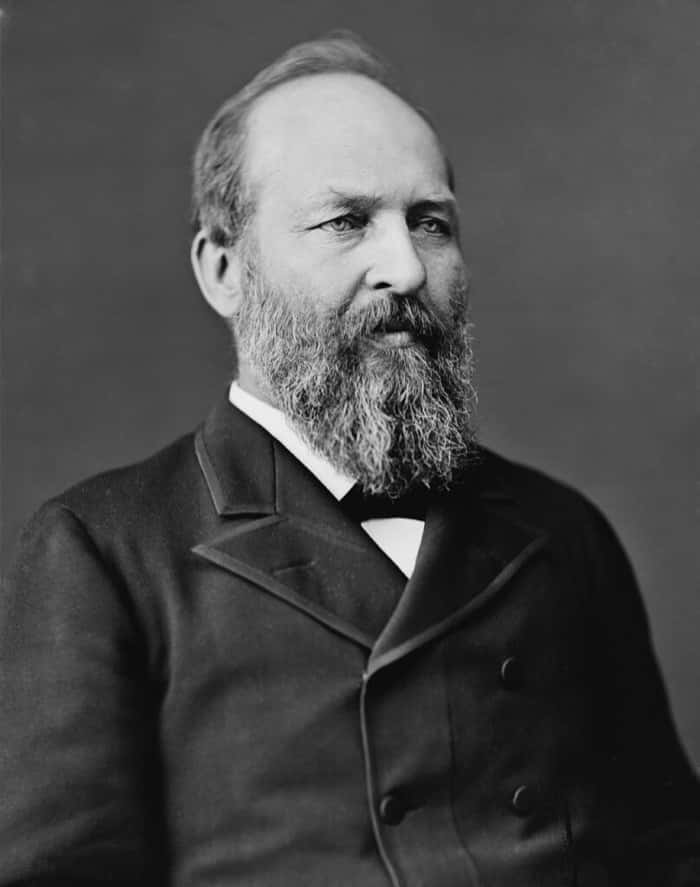
It was July 2, 1881, and President James A. Garfield had barely served four months in office when he was struck by two bullets at Washington D.C.'s Potomac Railroad Station. Having arrived a few minutes ahead of schedule for his 9:30 a.m. train to New York, Garfield was headed to deliver a speech at his alma mater, Williams College, after which he planned to begin his summer vacation. His travel plans had been widely publicized in the newspapers, and a send-off party that included several Cabinet members and two of his sons had gathered at the station.
Just minutes after Garfield walked into the station, Charles J. Guiteau launched his ambush. Firing a .442 Webley caliber British Bulldog revolver at point-blank range, he put a bullet into the President's back. A police officer who happened to be nearby arrested Guiteau on the spot. The assassin's motivations were political in nature, though his explanations shifted constantly. At first, he claimed that an unused speech he had written was the sole reason Garfield won the election, and he believed he was owed a consulship in Vienna or Paris as compensation.
Remarkably, Garfield survived the shooting and even displayed good spirits over the following days as he was brought back to the White House for bed rest. His doctors, however, managed to locate and remove only one of the two bullets — the second remained lodged near his spleen, undetected. With underdeveloped medical knowledge and inadequate sanitation practices, physicians repeatedly probed his wounds, and his condition deteriorated rapidly. On September 19, 1881, President James Garfield succumbed to sepsis.
In the aftermath, Guiteau's erratic and theatrical behavior made him a media sensation. His trial became the first high-profile case to feature an attempted insanity defense. The jury was unconvinced — he was found guilty of murder and sentenced to death on January 25, 1882. When the day of execution arrived, he danced his way to the gallows and recited his own poem as his final words. Guiteau was hanged on June 30, 1882, just two days shy of the first anniversary of the shooting.