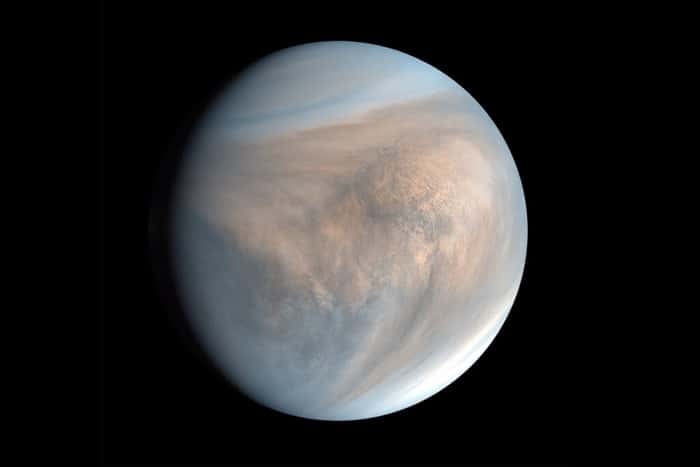
On September 14, 2020, a team of astronomers announced a fascinating discovery: possible signs of life on Venus. Using two powerful instruments — the James Clerk Maxwell Telescope (JCMT) in Hawaii and the Atacama Large Millimeter Array (ALMA) observatory in Chile — they examined the planet's atmosphere and cloud structures. What they uncovered was phosphine, a toxic gas that, according to their analysis, would only be generated by living organisms on a rocky world like Venus.
More than four centuries have passed since Galileo first documented his observations of that brilliant object in the night sky we call Venus. The Romans gave it its name, and for good reason — it is the brightest object visible in the sky. Of course, Venus wouldn't officially earn its designation as a planet until much later, once the fields of science and astronomy had advanced enough to catch up with Galileo's pioneering work.
What science can now say with confidence is striking: there is potential life on Venus, a planet that isn't our own. But this naturally raises an intriguing question — why haven't these Venusian residents ever come knocking on Earth's door? Based on what astronomers can determine, the type of life that exists on Venus is only capable of surviving in environments similar to those found on Venus itself.
Even today, Venus continues to spark our curiosity and wonder, largely because it's accessible to anyone who can gaze up at the stars — all you need to know is where and when to look. Though most objects in the night sky appear white to the unaided eye, Venus stands out with a distinctive greenish-yellow hue, a result of its atmosphere composed of carbon dioxide and sulfur.