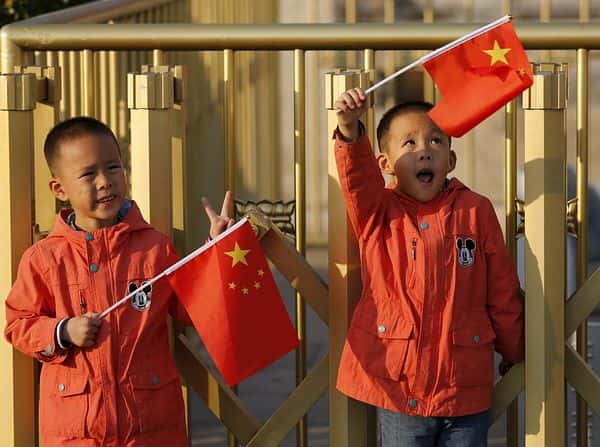
Birth control policies have long sparked heated debate across various settings, with religious and prolific groups largely rejecting such measures. On 29th October 2015, China brought its 35-year-long birth control project to a close, effectively putting an end to the nation's concerns about overpopulation.
The One-Child Policy
China's extraordinary population surge over the last hundred years is well documented. In response, the government launched family planning initiatives starting in 1970, introducing a range of restrictions. These included setting minimum ages for marriage and childbearing, enforcing mandatory gaps between births, and capping many couples at two children. The rules became far stricter by 1980, when authorities imposed a rigid one-child limit. Two years later, in 1982, this policy was formally enshrined in the constitution of the People's Republic of China. Enforcement was severe — in Guangdong, for instance, families who violated the rule faced fines equivalent to 3-6 years of income.
Certain exceptions existed for rural communities, minority populations, and families whose first child was a daughter. Yet for the overwhelming majority of Chinese women, life under the one-child policy meant enduring forced birth control or sterilization. The law mandated that women receive an IUD within four months of delivering their first child. When midwives started secretly removing these devices, authorities responded by instituting mandatory IUD inspections. Women who qualified for a second child were sterilized following that birth. In extreme instances, husbands and surplus children underwent sterilization as well. The scale was staggering: between 1980 and 2014, 324 women received a forced IUD and 108 million women were sterilized.
The End Of The One-Child Policy
Even though the State credited the policy with fueling China's economic rise and preventing an estimated 400 million births, it officially abolished the one-child rule on 29th October 2015. Officials pointed to the population imbalance and gender imbalance created by the policy as the driving reasons behind its termination.
Scrapping the one-child policy, however, didn't translate into unrestricted reproductive freedom. Families were instead allowed up to two children. This cap was further relaxed in May 2021 to permit three children, before all limits were ultimately removed in July 2021.
Quick Facts:
- Statistics show that the one-child policy encouraged sex-selective abortions where girls were killed for preferred boy babies.
- This era in Chinese history marks a period when there were the most child abandonment rates and overpopulation in orphanages.
- The one-child policy caused serious demographic concerns from experts arguing that prolonged continuation of the policy could result in irreversible fertility rates.
- Families with disabled children were often allowed to have more children but had to abide by birth spacing.
- The policy resulted in more women entering the workforce. Additionally, some girls received higher levels of education.