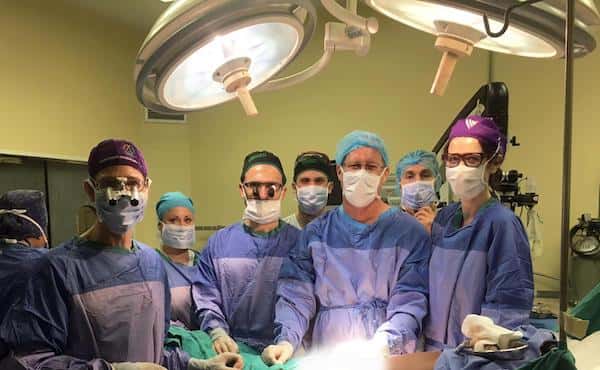
South Africa's surgeons have long been pioneers in pushing the boundaries of medicine, and they reinforced that reputation when they pulled off something remarkable: the world's first successful penile transplant. On December 11, 2014, a group of 11 medical practitioners — drawn from Cape Town's Stellenbosch University and the seasoned surgical team at Tygerberg Hospital — carried out this unprecedented procedure.
Lasting 9 hours, the operation achieved what no medical team anywhere in the world had managed before. Earlier attempts at other institutions had ended in failure. In China, for example, surgeons had tried a similar transplant only to see the patient's body reject the organ.
The surgical team chose not to make an immediate public announcement following the December 11, 2014, procedure, though they felt quietly optimistic about its success. It wasn't until March 13, 2015, that the Stellenbosch University medical department finally shared the breakthrough news with the world, confirming the transplant had been a success.
The recipient was a 21-year-old man — one of at least 250 South Africans who had undergone 250 penile amputations — and doctors expected him to regain full functionality following the landmark surgery. Penile amputation had been a devastating reality for young South African men, typically those aged 18 or 19, often resulting from complications tied to traditional circumcision. For those who lacked the psychological resilience to cope with such a traumatic loss, suicide became a tragic outcome. The medical team therefore viewed this breakthrough as profoundly important for individuals dealing with penile dysfunction and disfigurement.
Conceived as a pilot experiment tailored to a typical South African context, the procedure drew on established techniques from another groundbreaking field. Specifically, the doctors employed the same microscopic surgical methods used in the first facial transplant to meticulously reconnect nerves and tiny blood vessels during the penile transplant. Van der Merwe, who led the historic operation, expressed confidence that the technique could eventually be expanded to benefit cancer patients who have lost their penises.