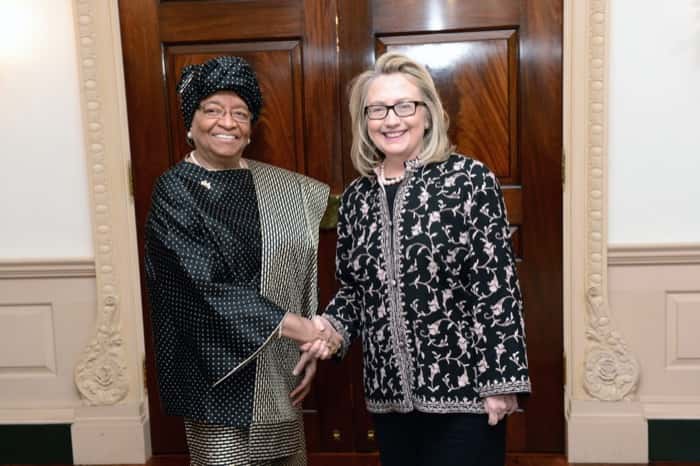
On January 16, 2006, a groundbreaking moment unfolded as Nobel Laureate Ellen Johnson-Sirleaf took the oath of office, stepping into history as the first woman ever elected to lead an African nation.
Background
Born on October 29, 1938, in Monrovia, Liberia, Ellen Johnson-Sirleaf came into the world as Ellen Eugenia Johnson. Though both of her parents grew up in impoverished circumstances, public life ran deep in the family. Her father, Jahmale Carney Johnson, was educated in Monrovia, where he adopted the surname Johnson as a tribute to Hilary R. W. Johnson, the country's first native-born president.
Education was also central to Ellen Johnson-Sirleaf's journey. Between 1948 and 1955, she studied at the College of West Africa, and at 17, she married James Sirleaf. Together they had four children, during which time she put her studies on hold. Eventually, she resumed her academic pursuits in the US, completing an Associate's Degree at Madison Business College and going on to earn a Bachelor's Degree from the University of Colorado. It was during her time studying in the US that the marriage ended in divorce, with James's abuse cited as the reason.
Ellen Johnson-Sirleaf's Politics
Ellen Johnson Sir-Leaf's entry into politics was anything but smooth. She launched a bid for Vice President in 1985, running alongside Jackson Doe. That campaign took a sharp turn when she was arrested on sedition charges after publicly insulting members of Doe's party. Authorities offered her a Senate seat instead, but she turned it down, pointing to election fraud as her reason. She was ultimately released and made her way back to the US.
Presidential Legacy
Winning the presidential election in 2005, Ellen Johnson-Sirleaf cemented her place in history as Africa's first elected female president. Prior to claiming that title, this woman of steel had already been deeply involved in Liberia's transitional government, serving as chair of the Governance Reform Commission and playing a crucial part in the nation's fight against corruption.
Economic growth defined much of her presidency. She dedicated herself to healing and rebuilding the war-torn country, successfully drawing in more than $16 billion in foreign investment.
Widely recognized as Africa's Iron Lady, she was honored with both the Ibrahim Prize for Achievement in African Leadership and the Nobel Prize (2011).