The Italo-Turkish War — sometimes called the Turco-Italian War — pitted the Kingdom of Italy against the Ottoman Empire in a struggle over colonial territory in North Africa. Italy's goal was to conquer Libya and Tripolitania, and the fighting stretched from September 1911 through October 1912.
Hostilities erupted after Italy issued an ultimatum on September 28th, 1911, which the Ottomans refused to negotiate. Italian forces moved swiftly, overwhelming Ottoman resistance and capturing key towns including Benghazi, Darnah, and Tripoli. As the Ottoman army steadily pulled back, Italy pressed deeper into the region, eventually seizing Djebel, Fezzan, Ghadames, and Murzuk.
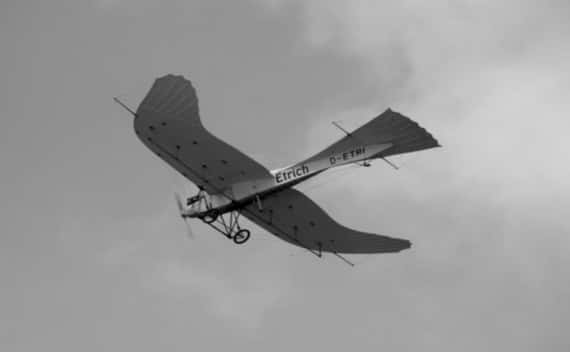
While historians have generally considered the conflict a minor one, it proved remarkably important for military technology — particularly when it came to the use of airplanes in warfare. On October 23rd, 1911, Italian pilot Captain Carlo Piazza made history by flying across the Turkish border in what became the first-ever aerial surveillance mission conducted with planes. His aircraft, the Bleriot XI, had been designed by Raymond Saulnier and Louis Bleriot and was constructed from oak and poplar.
Recognizing the enormous potential of aerial photography, Piazza returned to Italy and developed a patented camera specifically engineered for use aboard airplanes. Meanwhile, Italian forces continued making aviation history: on November 1st the same year, they dropped the first-ever aerial bomb. The Turks, though lacking any anti-aircraft defenses, managed to achieve their own milestone by becoming the first to bring down an aircraft using rifles.
Yet another Italian airplane sortie took place in December 1911, when a pilot flew over Turkish positions and released four hand grenades. In the years that followed, aerial combat rapidly evolved from a novelty into a dominant force on the battlefield, becoming the weapon of choice over time.