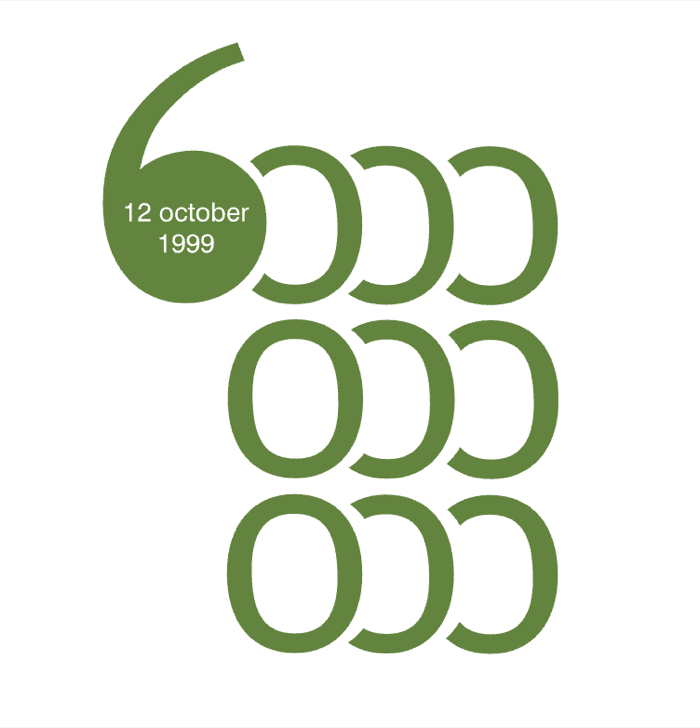
Against the backdrop of widespread anxiety over the Y2K bug potentially lurking in every computer across the globe, the United Nations designated an official date to mark the arrival of Earth's 6th billionth inhabitant. And sure enough, in the early morning hours of October 12, 1999, that milestone moment arrived.
The Six Billionth Person Was Born
Just two minutes past midnight on October 12, a baby boy named Adnan Mević entered the world in Sarajevo, Bosnia. The first son of Fatima and Jasminko Mević, he tipped the scales at 7.7 pounds. Cameras flashed, and the newborn quickly became a powerful symbol — a living mile marker for all of humanity. From that point forward, his birthday would be forever linked to the Day of Six Billion.
So what made the Day of Six Billion such a remarkable event? Put simply, experts believed reaching that number wasn't feasible. The U.N. had begun closely tracking global population because famine drives up the mortality rate in certain parts of the world. Rising population figures pointed to a troubling possibility: the planet might eventually be unable to feed and shelter its people.
Sadly, the Mević family's own story reflected that harsh reality. When the press caught up with Adnan and his family in 2011, they found them barely getting by.
A Look At The Billions
Here is a brief look at the world population growth.
- 1 Billion: Experts estimate the world population passed the one billion mark around 1800, just 30 years into America's history.
- 2 Billion: 1927
- 3 Billion: 1960
- 4 Billion: 1974
- 5 Billion: 1987
- 6 Billion: 1999
- 7 Billion: 2011
What's Next?
The growing strain of an overpopulated planet is a challenge that affects every nation, and the intervals between billion markers keep shrinking. According to U.N. projections, the 8th billionth person will be born on November 15, 2022. To keep a close watch on this ongoing issue, the United Nations Population Fund (UNFPA) was established.