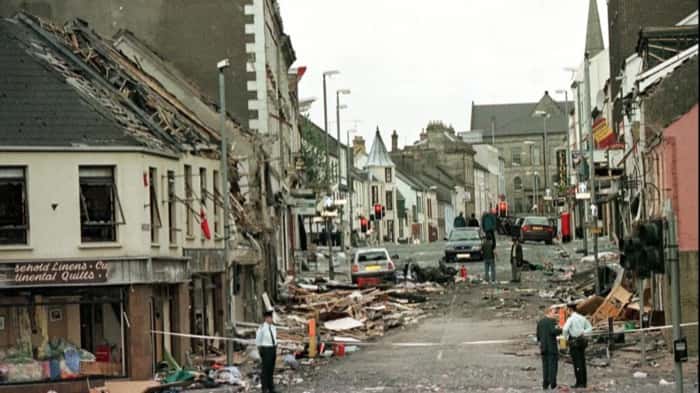
The single most devastating attack throughout the three decades of the Troubles in Northern Ireland took place on August 15, 1998, when the Real Irish Republican Army detonated a bomb in Omagh. This horrific act of violence came just months after the Good Friday Agreement had been signed—a landmark document that outlined the critical steps toward lasting peace in Northern Ireland.
It was in Tyrone County that the Real Irish Republican Army, a splinter extremist group, executed this act of terror. The bombers, transporting 500 lbs. of homemade explosives, had intended to park near the courthouse—their primary target—but were unable to find a parking spot. They ended up leaving the vehicle 400 meters away instead. The resulting blast claimed 29 lives and left at least 200 others injured.
At its core, the Troubles represented a civil conflict that spanned three decades in Ireland. On one side stood the majority Protestant community, which supported Northern Ireland's continued union with the UK. On the other was the minority Catholic community, whose aspiration was reunification with the Republic of Ireland.
Following the conflict's origins in the late 1960s, it took a few decades before the IRA and several protestant paramilitary groups finally agreed to lay down their arms in a ceasefire. This paved the way for delegations from the major parties to come together on April 10, 1998, putting pen to paper on the Good Friday Agreement and formally cementing the peace deal.
However, a significant faction within the IRA found the Agreement unacceptable. It demanded that they pursue their grievances politically through Sinn Féin, the representative political party, rather than through armed struggle. These dissenters split off and established a rival organization known as the Real IRA.
On that fateful day—August 15, 1998—the Real Irish Republican Army struck Omagh with a bomb attack that produced devastating mass deaths and casualties.