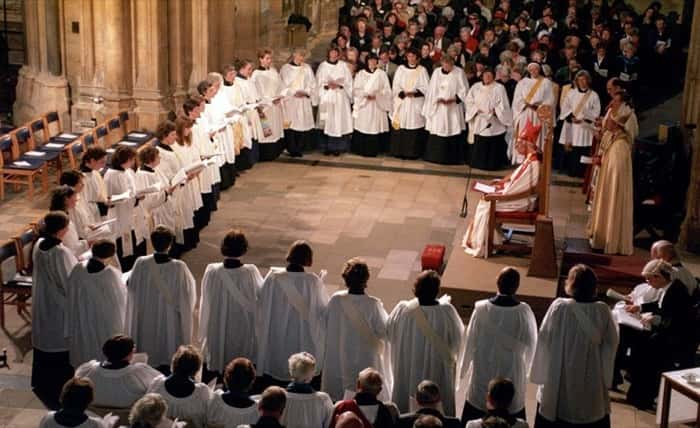
On November 11, 1992, something remarkable happened — though just barely. The General Synod, which serves as the Church of England's governing body, squeaked through a decision across its three constituent parts to permit women to be ordained as priests. The vote was narrow and steeped in controversy. Much like the long struggles of suffrage movements, the Church of England had been wrestling with the idea of women serving as priests for decades leading up to that moment. In many ways, their hand was forced — several Commonwealth nations had already welcomed women into the priesthood.
The First Woman Priest
The trailblazer was Florence Li Tim-Oi, whose ordination took place in Hong Kong. Back in 1944, Hong Kong functioned as an English province under Japanese occupation. Church leaders there faced a pressing dilemma: how could they deliver essential sacraments to their congregations? Since only ordained priests held the authority to minister to the faithful in this way, they chose the most capable candidate available — Florence Li Tim-Oi — and ordained her out of sheer necessity.
It wasn't until 1971 that Hong Kong took the formal step of voting to admit women into the priesthood. Canada came next in 1975, with the United States following in 1977. Throughout the eighties, various African provinces opened their doors to women priests, and New Zealand and Australia did the same before England finally joined them in 1992. Pockets of resistance still exist within the Church of England, but the overwhelming majority of regions now count women among their priests.
Women Catholic Priests?
While the Church of England and the Catholic Church share many similarities, they are not the same institution. Women remain barred from the Catholic priesthood, which has made the Church of England appear more welcoming to those with progressive sensibilities. This willingness to adapt to the desires of its people — rather than defer to papal authority — traces its roots back to when England severed ties with Catholicism during the reign of Henry the 8th. That dramatic split was driven by the king's insistence on obtaining a divorce, something the Church forbade at the time.
The General Synod's three branches cast their votes on November 11, 1992, and despite how close and contentious the outcome was, the Church of England's governing body narrowly approved the ordination of women as priests. Read more about this momentous occasion.