The Iran-Contra Affair
To all outward appearances, November 25, 1986, began as just another routine day at the U.S. White House. Ronald Reagan was deep into his second term as President—a period already mired in controversy and sensationalized media coverage. Throughout it all, President Reagan had been adamant on one point: he would never negotiate with terrorists. And yet, just twelve days earlier, on November 13, 1986, he had gone before the nation on National Television to address his role in a scandal that would become infamous as the Iran-Contra Affair.
The Iran-Contra Affair
The seeds of the crisis were practically inevitable. On October 5, 1986, Sandanista Rebels brought down a small cargo plane loaded with weapons and ammunition. Of the four people aboard, three were killed—two of whom were Americans—while the surviving fourth crew member, also an American, fell into Rebel hands. Questions about the incident began mounting almost immediately.
Then, in less than a month's time, a Lebanese Newspaper published a bombshell report exposing secret weapon shipments to Iran.
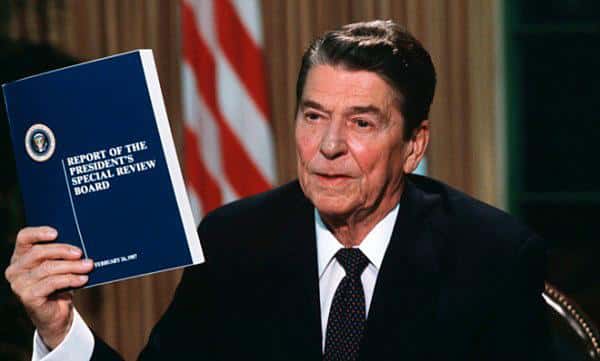
What tied these two seemingly distant events together—unfolding in countries thousands of miles apart—became clear on November 25, when Attorney General Edwin Meese publicly laid out how Colonel Oliver North had orchestrated the connection between them. The very next day, President Reagan announced the creation of the Tower Commission, tasked with investigating how and why significant elements of the U.S. Intelligence Community had operated outside the law.
We The People Find You…Not Guilty
Over the weeks that followed, the Reagan Administration found itself forced to explain a troubling chain of events: profits generated from weapon sales to Iran had been secretly funneled into covert CIA operations designed to support a guerilla rebel group in overthrowing their government.
President Reagan took to television, accepting responsibility while simultaneously maintaining he had no knowledge of the payments or any of the underlying details. Senior members of the Security Council had effectively shielded the White House and the President with plausible deniability. Even so, members of his Cabinet faced criminal charges and served prison time—only to later receive pardons from President Bush.