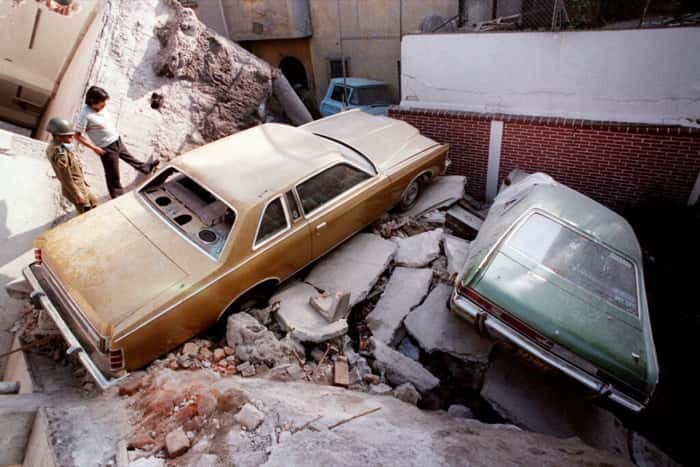
On the morning of September 19, 1985, a devastating earthquake measuring magnitude 8.1 slammed into Mexico City, unleashing destruction on a massive scale. The epicenter lay more than 200 miles west of the capital, yet the city bore the brunt of the catastrophe. In the aftermath, President Miguel de la Madrid downplayed the extent of the destruction and turned away offers of international assistance. Ordinary Mexican citizens, unwilling to stand by, took matters into their own hands and formed their own rescue brigades.
Striking at approximately 7:19 a.m., the magnitude 8.1 quake claimed the lives of more than 10,000 people and rendered more than 250,000 homeless. An additional 30,000 individuals sustained injuries as one of the world's largest urban areas was thrown into chaos by the catastrophic event.
It ranked among the most powerful earthquakes ever to hit Mexico City. The quake originated off the Pacific coast of Michoacán, roughly 200 miles west of the capital, and its destructive energy rapidly radiated toward the densely populated city on September 19, 1985.
The toll on Mexico City's infrastructure was staggering — more than 400 buildings crumbled entirely, while thousands of additional structures sustained significant damage. A major factor behind this widespread destruction was the city's location atop an ancient lake bed, where soft sediments intensified the seismic waves dramatically. The disaster also laid bare deep-seated corruption within President Miguel de la Madrid's government, revealing how lax enforcement of Mexico's building codes had left countless structures dangerously vulnerable.