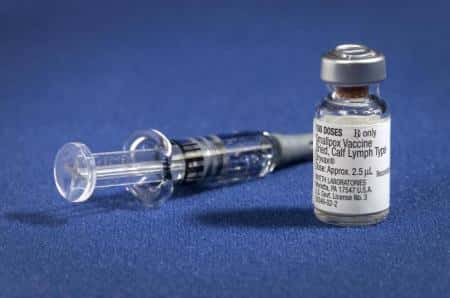
Imagine a disease so devastating that it covered its victims in agonizing pustules across the head, trunk, and legs — and killed roughly 3 out of every 10 people it infected. Those fortunate enough to survive still faced the threat of permanent scarring and blindness. So widespread was this scourge that experts believe smallpox claimed over 300 million lives during the 20th century alone.
Yet through a coordinated worldwide campaign spanning more than a decade, humanity managed to wipe out the naturally occurring smallpox virus for good.
The formal international push to eliminate the virus behind smallpox got off to a faltering start in the mid-sixties. By 1967, the world was grappling with 15 million cases and 2 million deaths annually, prompting the World Health Assembly and various health and humanitarian organizations to launch an all-out eradication effort. Survivors of the infection carried both physical and emotional scars for the rest of their lives. The disease produced bodily sores capable of spreading across vast areas of skin, and because facial sores were especially common, blindness was a frequent consequence. Each sore healed leaving a characteristic pit at its center — the very feature that gave the disease its name, smallpox.
On May 8, 1980, the disease was officially declared eradicated from the face of the earth.
The Last Case of Smallpox
Rahima Banu, just three years old at the time, became the last known person to naturally acquire the smallpox variola major strain, in 1975. Her case triggered an intensive vaccination drive targeting every household within a 1.5 mile radius of where she lived. She ultimately survived the illness.
Ali Maow Maalin became the final person to contract the variola minor on October 12, 1977, after sharing a ride with two smallpox patients traveling from the hospital. He went on to make a full recovery.
The story didn't quite end there, though. The last officially recorded smallpox case belonged to Janet Parker, an English woman who worked as a medical photographer on a floor directly above a research lab conducting smallpox studies. She contracted the disease under mysterious circumstances from that very lab and tragically died on September 11, 1978. In the aftermath of her death, a handful of additional unfortunate deaths followed — though with her passing, the disease was once again eradicated.