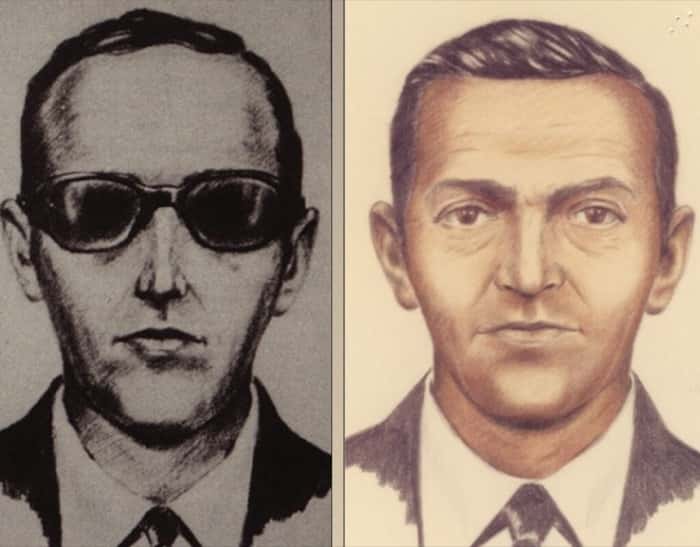
On November 24, 1971, nobody boarding Northwest Orient Airlines flight 305 could have imagined what was about to unfold. What was supposed to be a routine, quick hop from Portland, Oregon, to Seattle, Washington, turned into the launching point for one of the FBI's most perplexing investigations ever. A brazen hijacking, a jaw-dropping parachute leap from a jumbo jet — and just like that, D. B. Cooper vaulted himself into the annals of infamy.
Flight 305 Hijacked
The hijacking of flight 305 immediately triggered an FBI investigation, treated as a matter of national safety. Of course, hijackings were nothing new — they had been a persistent threat to both domestic and international aviation since the dawn of commercial flight. The sixties alone saw the global airline industry grappling with nearly two hijackings per year. These days, such incidents are extraordinarily rare thanks to modern security measures. But back when Cooper slipped his hijacking note to a flight attendant, virtually any passenger could stroll right into the cabin unchallenged. Cooper exploited the terror that came with commandeering an aircraft — not to make a political statement, but simply to escape law enforcement with $200,000 in ransom money.
Cooper's Demands
Cooper's note claimed his briefcase contained a bomb, effectively seizing control of the plane and holding all 36 passengers hostage. He demanded 4 parachutes along with $200,000 in twenty dollar bills. Once the aircraft touched down in Seattle, authorities complied with every demand, and the 36 passengers walked free. From there, the plane lifted off once more, carrying only a skeleton crew — and Cooper, poised to execute the final stage of his scheme. Successfully jumping from a flying Boeing 747 and living to tell about it is virtually impossible. Yet D. B. Cooper was never seen again, though small clues have trickled in over the years.
The FBI eventually moved the case into cold storage, though they remain prepared to follow up on the next tip that comes along.