It all started with a jolt. On October 4, 1957, the Soviet Union launched Sputnik I, hurling the first man-made aircraft into earth's orbit and sending shockwaves through the United States government and scientific community. The national security ramifications were enormous — any adversary capable of orbiting the globe could, theoretically, drop a nuclear warhead on any target. Just like that, the space race between the Soviet Union and the United States was born.
What followed was an intense contest between two superpowers vying for space-age supremacy, a rivalry that escalated dramatically when the Soviet Union completed the first manned orbit of Earth on April 12, 1961. The US answered with a bold declaration: President John Kennedy, addressing a joint session of Congress on May 25, 1961, proclaimed his intention to put a man on the moon and bring him home safely before the decade was out.
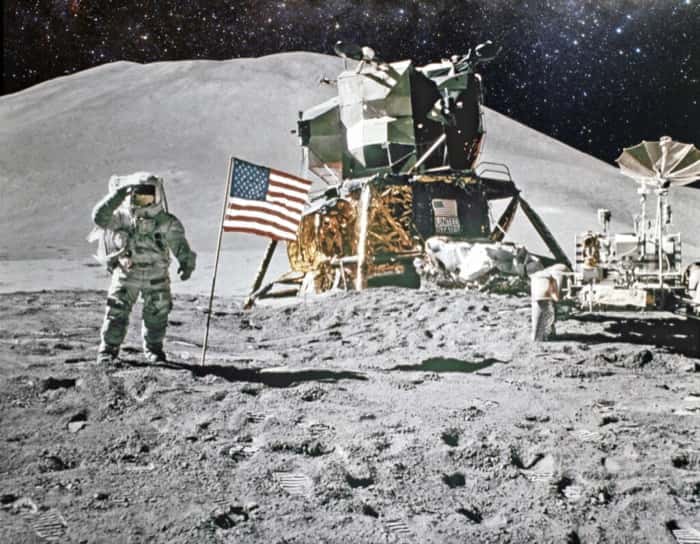
Against all odds, and within an insanely compressed time frame, that vision became reality. On July 20, 1969, Commander Neil Armstrong and Lunar Module Pilot Buzz Aldrin climbed into the Lunar Module Eagle, broke away from the Command Module, and began their descent toward the lunar surface. But things didn't exactly go as planned.
Roughly five minutes after beginning their descent, a series of 1201 and 1202 computer alarms flashed, raising the frightening possibility of an abort. NASA ground control ultimately determined that the alarms were tied to a guidance control overload issue and gave the crew the go-ahead to continue. Then, as they closed in on the surface, Armstrong recognized that the programmed landing zone was boulder covered and inaccessible. He switched off the autopilot feature, seized manual control of the lander, and began hunting for the ideal location. At 3:17 pm, with a razor-thin 25 seconds of fuel remaining, the Eagle touched down on the lunar surface — and for the first time in history, a man was on the moon.
Nearly seven hours later, Armstrong stepped out of the lander, soon followed by Aldrin. The pair spent 21 hours and 36 minutes walking and working on the moon's surface before firing up the Lunar Module's ascent stage, rendezvousing with Command Module pilot Michael Collins in orbit, and making the journey safely back to earth — fulfilling the vision President Kennedy had laid out a mere eight years before.