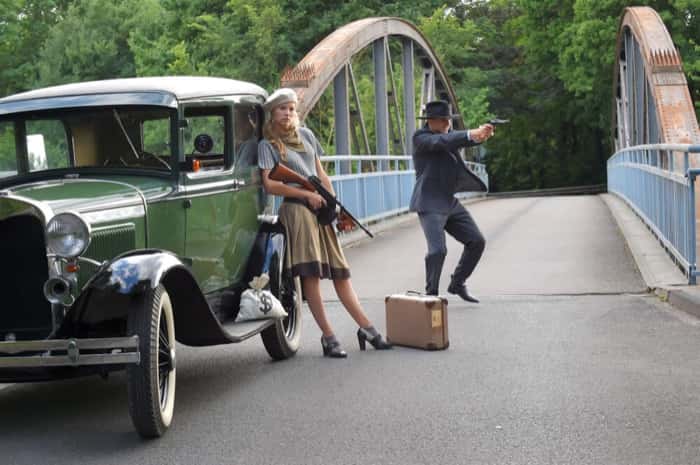
Few couples have achieved the level of infamy that Clyde Barrow and Bonnie Parker managed to earn. Their legendary crime spree, carried out against the backdrop of the Great Depression, would eventually lead to their downfall. In the years since, the duo has ascended to pop culture legend status, inspiring numerous screenplays over the decades.
Warren Beatty and Faye Dunaway starred in Bonnie and Clyde, which hit theaters on August 13th, 1967. Under the direction of Arthur Penn, the movie was intended to strike a lighter chord, weaving comedic moments and romantic elements throughout. As one of the earliest films of the "New Hollywood" era, Bonnie and Clyde helped usher in a fresh approach to filmmaking that stood in sharp contrast to the more conservative sensibilities that had previously dominated the industry.
By depicting sex and violence with a frankness rarely seen before, Bonnie and Clyde shattered existing boundaries. Its finale has achieved iconic status — widely described as the bloodiest death scene in cinematic history.
Warner Bros. initially showed reluctance to market the film broadly, opting instead to give Bonnie and Clyde a limited theatrical release. Yet the controversy surrounding it proved to be a powerful engine for publicity, rapidly drawing attention across the United States and turning it into an unexpected sleeper hit.
The film's momentum only grew from there. By March 1968, it had climbed to become the studio's second highest-grossing film of all time. Many regard Bonnie and Clyde as the creative wellspring that inspired several of the greatest gangster films ever made.
That said, the film has never escaped criticism for having opened the floodgates to escalated violence in cinema. Even so, the American Film Institute ranks it among the top motion pictures of all time.