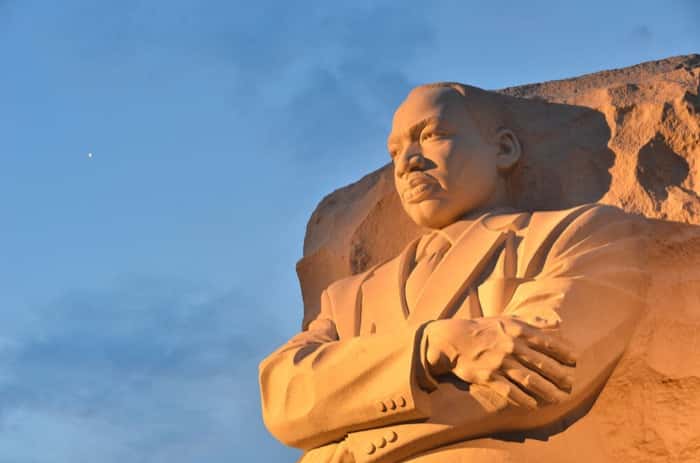
It was August 28, 1963, when Martin Luther King, Jr. stood before a massive gathering of over 250,000 people and delivered what would become the defining moment of his legacy — the iconic "I have a dream" speech. The crowd had assembled at Lincoln Memorial as part of the March on Washington for Freedoms and Jobs, and King's words painted a powerful vision of racial harmony. He spoke of a future in which black and white could coexist peacefully, where "the sons of former slaves and the sons of former slave owners could sit down together at the table of brotherhood, and his four children would no be judged by the color of their skin but by the content of their character."
The life of Martin Luther King Jr. as a civil rights activist
Born in 1929 in Atlanta, Georgia, Martin Luther King followed a path laid down by both his father and grandfather — studying theology and eventually serving as a Pastor of the Baptist Church. By 1957, he had risen to the presidency of the Southern Christian Leadership Conference (SCLC), transforming the organization into a driving force in the civil rights movement. King championed nonviolent resistance to segregation, a philosophy that manifested through boycotts and marches.
King's tireless campaign for racial equality saw him deliver hundreds of speeches, with the celebrated 'I have a dream speech' standing above them all. The year following the March on Washington — 1964 — brought landmark victories for the movement. Among these was the ratification of the 24th amendment of the constitution, which abolished the poll tax (which prevented poor Black Americans from voting). Equally significant was the passage of the Civil Rights Act of 1964, a sweeping law that outlawed racial segregation and discrimination in education and employment.
Throughout his relentless pursuit of equality, King faced arrest over 20 times. His commitment to nonviolent struggle for civil rights earned him the Nobel Peace Prize in 1964. Tragically, on April 4, 1968, King's life was cut short at the age of 39 when escaped convict James Earl Ray shot him on his motel room balcony in Memphis, Tennessee, U.S.