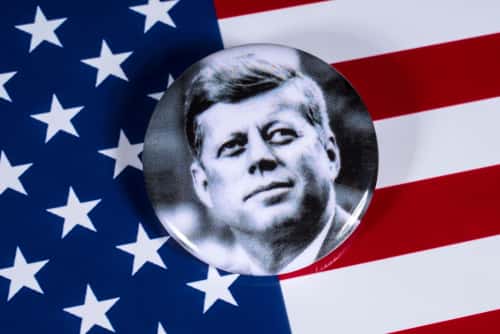
On June 10, 1963, the United States government made a landmark move in the fight against gender discrimination. That day, US President John F. Kennedy put his signature on the Equal Pay Act — a groundbreaking piece of legislation mandating that men and women receive identical wages when performing equal work.
With this act, Kennedy delivered a powerful statement: compensation in the workplace should be determined by merit, not gender. Beyond establishing the principle of pay equality, the legislation strengthened women's legal protections against unfair wages and outlawed sex-based pay disparities across most forms of labour employment.
Facts About the US Equal Pay Act
- A lengthy campaign advocating equal pay for equal work ultimately gave rise to the Equal Pay Act.
- Unequal wages for women had become a rallying issue, with countless women actively pushing for change.
- The National Committee on Pay Equity took up the matter, examining just how widespread and complex the problem of wage inequality had grown.
- When the United States entered World War II in 1941, large numbers of women stepped into roles previously held by men, as many men had been drafted into the armed forces.
- Prior to the US Equal Pay Act, black men had fewer jobs and better pay than white women. The vast majority of jobs in the United States were held by men.
- The legislation was specifically crafted to cover positions where men and women routinely carried out similar tasks. Menial or clerical jobs fell outside its scope.
- Because the Equal Pay Act functioned as an executive order, its reach was limited to federal contractors and businesses operating under government contracts.