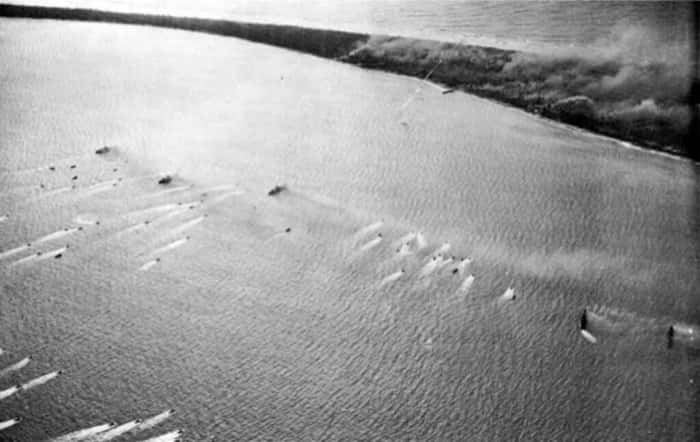
February 20th, 1944, marked a pivotal moment in the Pacific Theater of World War II when Allied forces launched their assault on Enewetak Atoll's island, situated near the Marshall Islands. What made this engagement stand out was the meticulous strategy and planning behind it — an approach that proved instrumental in wresting control of this vital Pacific outpost from enemy hands, ultimately contributing to the accelerating momentum toward Allied victory over Japan.
This confrontation unfolded as part of a broader military effort called Operation Catchpole, a campaign designed to dislodge Japanese forces entrenched across numerous islands in the region. Enewetak stood out as a priority target because of its considerable strategic value. The atoll functioned as an airbase that enabled Japanese planes to conduct regular strikes against surrounding targets — among them, U.S. ships positioned near Ulithi Atoll.
Setting Up For Success
Well before the first shells flew, a marines team dedicated several days to carefully surveying and mapping the island's terrain. Their objective was to pinpoint the locations of enemy encampments and craft a battle plan that could deliver control of the island without catastrophic casualties on either side. To bolster the coming offensive, 17 Army units and Navy ships — encompassing everything from infantry forces to heavy artillery pieces — were deployed in a support capacity.
Beyond assembling additional manpower, commanders also received intelligence reports that proved invaluable. These briefings outlined the resistance tactics likely to be encountered upon landing, flagging potential defensive positions as well as fortifications the Japanese had already constructed by the time of approach. Armed with this knowledge, planners wove every available detail into a comprehensive assault strategy, giving them the ability to identify trouble spots well before boots hit the ground.
The Aftermath
For seven grueling days, the fighting persisted without pause. When it was over, allied forces had wrested Enewetak from Japanese control and wasted no time constructing airstrips, opening the door for additional aircraft to enter the campaign. Every last Japanese holdout was eventually rooted out, though the toll proved steep on both sides — largely due to cannons positioned atop nearby hills.
The unwavering determination displayed by the soldiers who fought in this battle earned them widespread praise, honor, and recognition.
Looking Back Now
In the decades since, numerous memorials have been erected to honor the sacrifices made by combatants on both sides of this conflict. Each year, as the anniversary of the battle approaches, locals gather to reflect on the victory that was won and to pay tribute to those who gave their lives in the struggle.