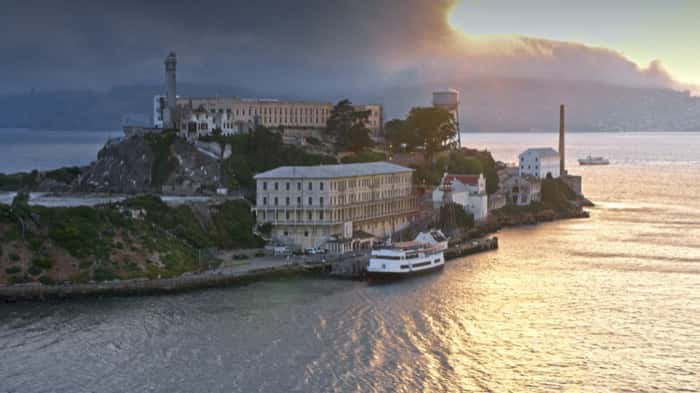
Before it earned its reputation as the most escape-proof prison in America, Alcatraz had already spent 29 months housing some of the nation's most infamous criminals — names like Al Capone, George "Machine Gun" Kelly, and Robert Franklin Stroud. Yet despite that fearsome reputation, inmates kept trying to break free. Across the prison's history, 36 inmates made 14 separate escape attempts. Of those 36, 23 were recaptured, six were shot and killed, two drowned, and five simply vanished without a trace. Among those five lost souls were Theodore Cole and Ralph Roe.
Cole & Roe
Both Theodore Cole and Ralph Roe had been convicted of robbery in Oklahoma. Each man independently tried to escape from McAlester Prison, and those attempts earned them transfers — first to the high-security facility at Leavenworth Prison, and ultimately to Alcatraz in 1936.
Once on the island, the two landed jobs in the facility's mat shop, a workspace where old tires were sliced apart and converted into rubber mats destined for the Navy.
While working there, Cole and Roe slowly went to work on the window bars with a hacksaw blade, methodically weakening them over time. To keep their progress hidden, they filled in the cuts each day using a clever mixture of grease and shoe polish.
The Escape
December 16, 1937 brought heavy fog to the island. When prison guards conducted their routine inmate check at 1:00 pm, both Cole and Roe were accounted for. But just 30 minutes later, at the 1:30 pm count, the two men had vanished.
Searching the mat shop, guards quickly discovered what had happened: a hole had been carved through the window. Two bars and three heavy window panes had been compromised, leaving an opening roughly 9 inches high and 18 inches long. From there, the pair had used a wrench to crack open the gate lock before dropping 20 feet down onto the beach below.
What Happened To Roe & Cole?
A thorough search of the beach and surrounding land at Alcatraz turned up nothing, and prison officials eventually concluded that the two men had perished — either by drowning or from exposure to the unusually cold water.
Still, in the days, weeks, months, and years that followed, reported sightings trickled in. Two hitchhikers claimed they had encountered the pair. A San Francisco Chronicle report in 1941 suggested Cole and Roe were living in South America. And back in Theodore Cole's hometown, a cab driver told police he had been shot by two men who matched the fugitives' warrant photos.
So what really became of the two escapees?
No one knows.