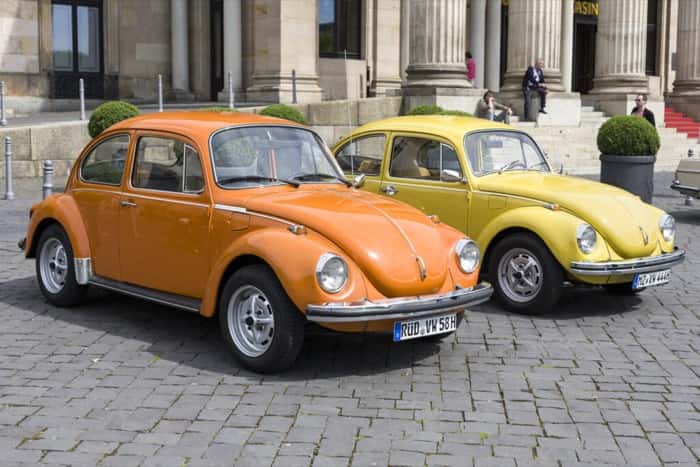
It was on February 15, 1936, that Adolf Hitler unveiled his ambitious plan to build what would become one of the most recognizable automobiles in history – the Volkswagen Beetle. The driving force behind this announcement? A desire to put an affordable four-wheeled vehicle within reach of ordinary German citizens.
A People's Car
Before WWII, owning a car in Germany was largely a privilege reserved for the wealthy, as most available vehicles fell squarely into the luxury category. Hitler saw an opportunity to simultaneously lift German morale and tackle unemployment by developing an economical mass-market automobile that every citizen in the country could realistically own. The concept resonated immediately, giving rise to Volkswagen – a name that translates to "people's car" in German.
Design Goals
Simplicity sat at the heart of the Volkswagen Beetle's engineering. Its robust metal frame housed a single-cylinder engine while still offering room for five passengers. Beyond that, the designers set out to achieve a top speed of 100 km/h (62mph), ensure the car could haul heavy loads, and guarantee dependable performance through harsh conditions like rain or snowfall. As if all that weren't enough, the finished design delivered impressively low fuel consumption rates – a feature that made this already practical vehicle even more attractive to budget-conscious buyers.
Hitler's Vision
The Beetle's creation owed much to Hitler's personal involvement. He commissioned designer Ferdinand Porsche to craft a vehicle that matched his specific idea of what the perfect car should look like. That very same year, he laid out plans to have 10,000 Beetles rolling off production lines by 1940 – a remarkably ambitious target given that no factory capable of manufacturing at that scale even existed yet! War brought countless obstacles that threatened the entire project, but the dream ultimately materialized when production finally got underway in 1946, and the car went on to sell over 1 million units!
The Volkswagen Beetle remains one of the best-selling and most beloved automobiles the world has ever known – widely regarded as a symbol of freedom and individualism across the globe, all thanks to the bold vision Adolf Hitler set in motion more than 80 years ago.