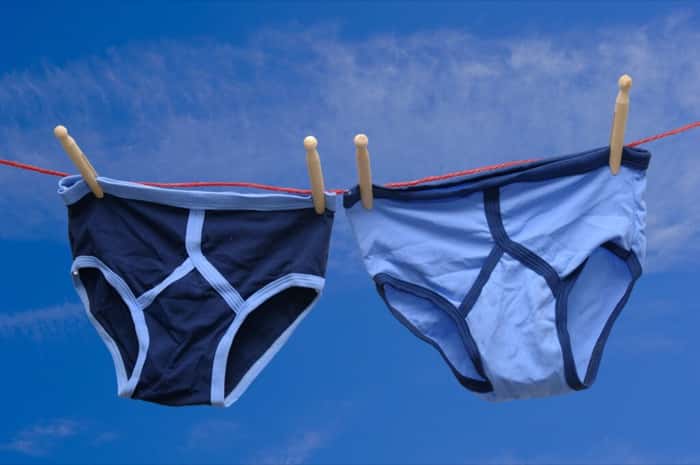
Men's underwear has come a long way through the centuries. During the 1800s and into the early 1900s, the standard was a one-piece garment that merged an undershirt with drawers, typically crafted from cotton, linen, or wool. Then came the 1920s, when a company called Everlast introduced "boxers" — a fresh take on men's undergarments that quickly gained traction. Still, despite their popularity, plenty of men craved something that provided more support. That desire was finally answered in 1935 when Coopers Inc. revolutionized the underwear industry with a snug, brief-style design that flew off the shelves the moment it became available.
A designer named Arthur Kneibler was employed at Coopers, a Midwestern firm focused on manufacturing undergarments. The spark of inspiration came from an unlikely source — a postcard sent by a friend who was vacationing along the French Riviera. The postcard itself was nothing remarkable, featuring a reproduction of Paul Cezanne's famous painting, The Large Bather. But for Kneibler, who was actively searching for fresh design concepts, that image triggered a vision that would reshape the entire landscape of men's underwear.
Coopers unveiled briefs to an eager public on January 19, 1935, at none other than the world-famous Marshall Fields department store in Chicago. The response was staggering — all 600 pairs vanished within a single day. To draw attention, the store had placed a male mannequin in its window dressed in nothing but the new briefs. What made men embrace them so enthusiastically was the superior support they delivered compared to long johns, rivaling what a jockstrap could offer. Coopers branded their creation "Jockey" shorts, a name that played directly into the supportive qualities of the garment. Riding the wave of that branding success, Coopers Inc. eventually rebranded itself as Jockey Menswear — a name destined to grow ever more recognizable in the fashion world.