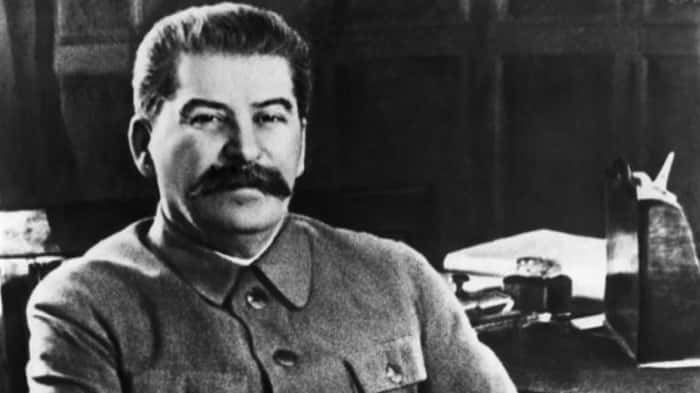
Between August 1936 and March 1938, the Soviet Union witnessed one of its most horrific chapters. Under the guise of seeking justice for the assassination of Sergey Kirov — a prominent Communist party official — Joseph Stalin launched what became known as the Great Purge, a calculated campaign to reassert his dominance over the communist party.
The Back Story
Joseph Stalin rose to prominence as the Soviet General Secretary of the Communist Party, but his legacy is perhaps most defined by the devastating Great Purge of 1934-1938. While the narrative pushed at the time framed Stalin's actions as retribution for Kirov's death, the reality ran much deeper — this was a deliberate scheme designed to tighten his grip on the Communist party.
The path to power had not been without rivalry. Joseph Stalin and Leon Trotsky had competed fiercely for the General Secretary position, with Stalin ultimately winning the favor of many and claiming the role. Yet as time went on, his supporters grew disillusioned, particularly over his stance on the First Five-Year Plan and collective agriculture. This erosion of loyalty fueled a growing paranoia within Stalin, which ultimately drove him to set the Great Purge into motion.
The Great Purge
Carried out between 1936 and 1938, the Great Purge was a systematic operation conceived by Stalin and executed through the NKVD — The People's Commissariat for International Affairs — which functioned as the USSR's secret police.
At its core, the purge was about crushing any and all opposition to Stalin's rule. It brought with it widespread torture and the mass massacre of minority German communities singled out for deportation. The campaign unfolded in stages: first came the removal of central party leadership, specifically the Old Bolsheviks officials. Next, Stalin turned his sights on the Red army's military high command, systematically eliminating its top ranks.