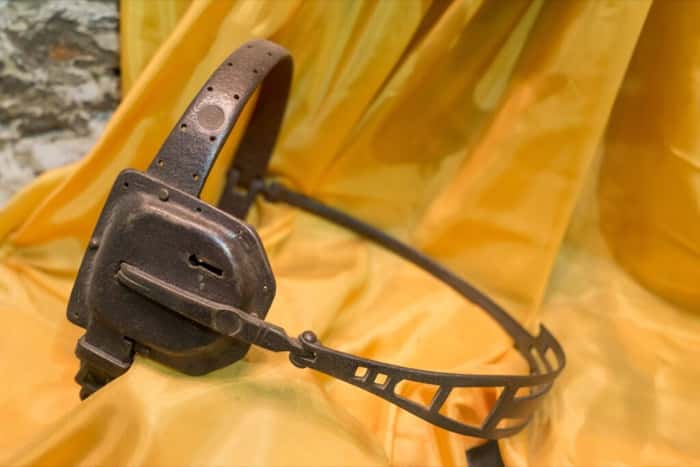
A baker by trade and a family man by all appearances, Henri Littière of Paris had grown fed up with what he saw as his wife's unfaithful behavior. His answer to the problem? Locking her into a chastity belt.
What Is A Chastity Belt?
Designed specifically to make sexual intercourse impossible for the wearer, a chastity belt — sometimes called a chastity device or garment — has long captured the public imagination. These contraptions are believed to have been constructed at least partly from metal, making them extremely difficult to remove.
The popular story goes that knights heading off to war would lock their wives into these devices, ensuring fidelity during their long absences from home.
Chastity Belts: Fact or Fiction?
For all their prominence in legend and folklore, the historical record tells a very different story — there is an overwhelming lack of evidence suggesting chastity belts were ever genuinely used. Take Catherine de Medici's famous chastity belt, for instance: when the metal was actually tested, it turned out to be a product of the 19th century — crafted centuries after her death in 1589.
But where did the whole concept originate? Scholars believe it traces back to the Romans. Sarah E. Bond, an assistant professor at the University of Iowa, has pointed to the tradition of Roman brides donning white tunics fastened with a special Herculean knot on their wedding day. This so-called love knot symbolized the bride's chastity and was meant to be untied only by her new husband on their wedding night.
The term "chastity belt" itself can be traced to a 1405 work titled Bellifortis, where author Konrad Kyeser described such a device intended to keep women faithful. That said, the book was laced with satirical humor and even featured objects purported to render people invisible. No physical evidence of an actual chastity belt from this era has ever surfaced. Historians have also raised practical concerns — namely, whether such a device would have allowed a woman to carry out basic bodily functions like menstruation and defecation.
The Sad Fate of Juliette Littière
Fast forward to 1934, and a man named Henri Littière took the concept of the chastity belt quite literally, deciding it was a perfectly acceptable way to control his wife, Juliette, whom he considered promiscuous. He compelled her to wear one — until January 21, when he found himself hauled before a court to face charges of cruelty against his wife.
Making matters worse, this wasn't Henri's first time subjecting his wife to such treatment. As a repeat offender, the court handed down a sentence of three months behind bars along with a fine of 50 francs.