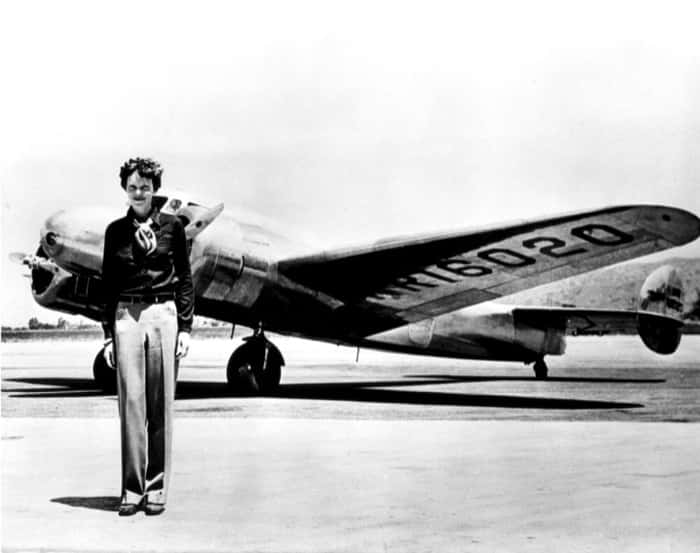
Born on July 24, 1897, Amelia Earhart would become one of aviation's most celebrated female pilots — and one of its greatest mysteries, vanishing without a trace on July 2, 1937. While her transcontinental flight record on August 25, 1932, stands as a remarkable achievement, it was far from her only groundbreaking accomplishment.
Atchison, Kansas, in the United States, was where Amelia first entered the world. Her passion for the skies ignited in December 1920, when she experienced her very first flight. By 1922, she had already acquired her own aircraft — a second hand, two-seat Kinner Airster. The world took notice of her in 1928, when she became the first female to fly across the Atlantic, though male pilots accompanied her on that journey.
But Amelia wasn't content sharing the cockpit. On August 24, 1932, she climbed into a Lockheed Vega 5B in Los Angeles and pointed it toward the East Coast. She touched down in Newark one day later, having traversed 2,447.8 miles over the course of 19 hours and 5 minutes. Throughout this record-breaking journey, Earhart maintained an average speed of 128.27 miles per hour and mostly cruised at an altitude of 3333.3 yards.
With her arrival on August 25, 1932, Amelia Earhart sealed her place in history as the first-ever female to complete a nonstop, solo, transcontinental flight. She wasn't done pushing boundaries, either — just a year later, Amelia shattered her own record by completing the same route in only 17 hours and 7 minutes.
Beyond being the first woman to fly solo and nonstop across the Atlantic, she was also only the second person ever to do so. From there, Amelia continued racking up milestones throughout her aviation career. Tragically, it all came to an end when Earhart departed Oakland, CA, on what would be her final flight. On July 2, 1937, her extraordinary life and career were cut short as her plane vanished mysteriously, taking both her and her navigator, Fred Noonan, into the unknown.