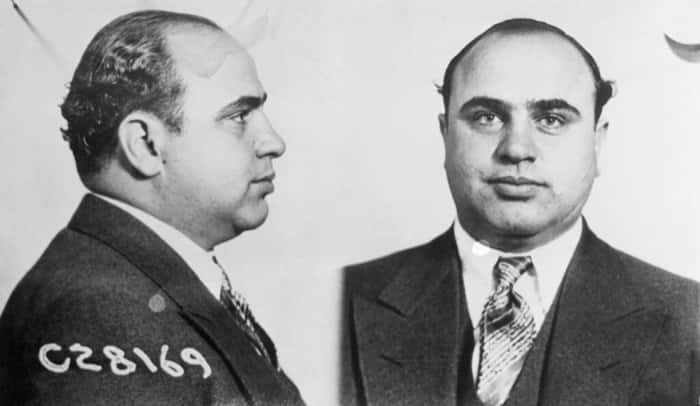
Few names in American crime history carry as much weight as Al Capone, the infamous gangster who ruled the streets of Chicago. His exploits have inspired countless books and films, and to this day, the City of Chicago profits from tourists eager to visit the spots where Capone once lived and conducted his operations.
That empire crumbled on this day in 1931, however, when the 33-year-old mobster was handed an 11-year sentence in a Federal Prison, bringing his seven-year reign of criminal power to a decisive close.
Law enforcement had long struggled to build a solid case against Al Capone for his mafia activities — the Valentine's Day Massacre chief among them — but the evidence simply wasn't sufficient for a conviction. The breakthrough finally came from an unlikely source: Capone's own business partner and tax man, Edward O'Hare, who provided critical information about the gangster's tax dealings.
His Time in Prison
Soon after Al Capone arrived at the Atlanta Penitentiary, doctors diagnosed him with gonorrhea and syphilis. On top of that, he was forced to go through cocaine withdrawal, a habit that had already perforated his septum.
Capone took up a prison job stitching soles on shoes, but his mental state started slipping. Other inmates viewed him as vulnerable, and former gang associates attempted to intervene on his behalf. The resulting tensions led authorities to transfer Capone to Alcatraz.
Life at Alcatraz proved to be a turbulent chapter. On one hand, he earned the privilege of playing banjo in the prison band The Rock Islanders. On the other, he was stabbed by a fellow inmate during his time there. His physical condition kept worsening as well, and he spent his final year at the facility confined to the hospital ward.
Early Release
Capone's deteriorating health prompted authorities to release him from prison ahead of schedule on November 16, 1939. In a chilling coincidence, Edward O'Hare had mysteriously been killed by gunshot wounds while driving just a week earlier.
Following his release, Capone was admitted to the Union Memorial Hospital to undergo treatment for syphilitic paresis. He recovered enough to eventually return home and became one of the first American patients to be treated with penicillin. While the drug managed to slow the progression of his disease, the damage already done to his brain was irreversible. By 1946, a Baltimore psychiatrist concluded that Capone possessed the mental capacities of a 12-year-old. He spent his remaining days surrounded by his wife and grandchildren before passing away on January 25, 1947.