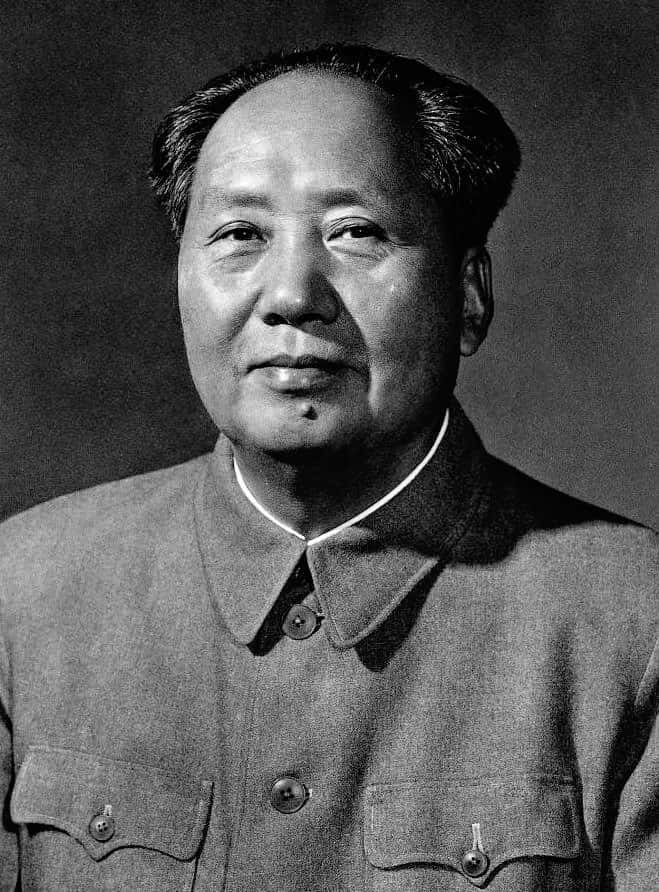
Historical documents serve as windows into pivotal moments of the past. On January 5, 1930, Mao Zedong penned a letter addressed to Lín Biāoin, offering sharp criticism of the direction his Party was taking with its revolutionary efforts. Nearly a century down the line, that letter stands among thousands of documents and artifacts carefully preserved so that future generations can study Mao Zedong and the mark he left on both Chinese and world history. The famous phrase "A single spark can start a prairie fire" is tied to what Mao Zedong described as the "peasant problem." But what's the connection between prairie fires and Chinese peasants?
A Single Spark Can Start A Prairie Fire
Throughout Chinese History, the prairie fire quote has been invoked by Chinese leaders time and again. Its roots stretch back more than 2,000 years, when it was employed in a literal sense — posing the question of whether a grassfire can be put out if nobody is able to get close to it. In English translation, the idea reads: "If a fire rages on the grassland and one cannot go near, can it still be extinguished?" During the sixteenth century, Zhāng Jūzhèng of the Ming Dynasty borrowed the phrase but trimmed away the latter portion, distilling it into the concise three-letter English translation phrase "a single spark."
In Chinese culture, the Chinese spelling of this phrase resonates deeply because its message is unmistakable: push the Chinese people beyond their limits, and they will rise up to overthrow the government. Mao Zedong understood this reality well in the years leading up to his political party's eventual seizure of power in 1949. He would go on to become Chairman Mao, heading the People's Republic of China under the rule of the Communist Party of China. Notably, this is the very same political party now grappling with widespread protests over Pandemic lockdowns.