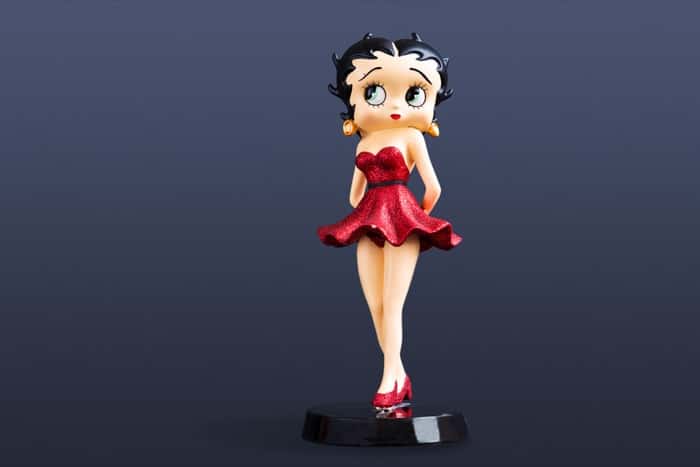
On August 9, 1930, the world got its first glimpse of Betty Boop in "Dizzy Dishes," complete with her signature heels, garter, and those famously long eyelashes. The Max Fleischer cartoon follows Bimbo — a waiter/chef/dog — as he frantically tries to deliver a roast duck to a gorilla seated in a nightclub. But the moment Betty takes the stage and croons "Boop-Oop-a-Doop," Bimbo is smitten, serenading her right back while strumming the duck as though it were a guitar.
The gluttonous primate devours his plate and table whole, then catches sight of Bimbo and the bird, launching a wild chase throughout the club. Bimbo ultimately makes his escape aboard a makeshift train cobbled together from kitchen utensils — but not before swiping the gorilla's pants.
It's worth noting that Betty Boop plays only a supporting role in this debut appearance, yet she would eventually rise to become the most beloved property in the entire Fleischer Studios lineup.
In her "Dizzy Dishes" incarnation, Boop is actually an anthropomorphic poodle — a far cry from the quintessential flapper figure that audiences would come to recognize and adore.
Drawing inspiration from Clara Bow, Esther Jones, and Helen Kane, the character gradually transformed: her dog ears evolved into long earrings, and her fur gave way to tight curls. She went on to star in over 100 cartoons throughout the 1930s and even appeared in the first Popeye cartoon in 1933.
The Hollywood Production Code threw a wrench into things in 1934, compelling the studio to redesign her in long dresses and tone down her sultry persona. Adding to Betty's woes, Clara Bow filed a copyright infringement lawsuit against Fleischer Studios.
Yet none of these setbacks could keep Betty Boop down for long. Thanks to ongoing syndication, guest appearances, and a wealth of merchandise deals, she remains instantly recognizable to cartoon enthusiasts across generations worldwide — the bubbly, spirited embodiment of the Jazz Age.